A steep road can make a learner who has driven smoothly for miles suddenly feel under pressure. A good hill start driving lesson turns that pressure into a clear routine: hold the car securely, find the right balance of controls, check it is safe, and move away without rolling back. The aim is not to rush. It is to stay in control, even when there is a car waiting behind you.
Why hill starts feel difficult
A hill start asks you to coordinate several actions at once. In a manual car, your left foot needs to find the clutch biting point while your right foot manages the accelerator and brake. Your hands must keep the steering straight, and your attention must remain on the road rather than on the driver behind.
That is why learners often stall, rev the engine too much or release the handbrake before the car is ready to move. None of these mistakes means you cannot drive. They simply show that the routine needs more calm, repeated practice.
Oxford and Oxfordshire offer plenty of useful real-world practice, from gradual residential slopes to busier uphill junctions. The best place to begin, however, is a quiet hill where you have time to understand what the car is telling you. Once the controls feel familiar, the skill can be practised at junctions, in traffic and on routes similar to those used for the driving test.
The manual hill start routine
Your instructor may adapt the sequence to suit the car and your experience, but the principle stays the same: the parking brake holds the vehicle while you prepare the engine and clutch to take over.
Start with the car stationary, the parking brake applied and first gear selected. Press the clutch fully down, then bring it up slowly until you feel the biting point. The front of the car may lift slightly, the engine note may change, or you may feel a gentle pull through the pedals. These are useful signs that the clutch is beginning to engage.
Add gentle accelerator pressure. There is no magic number on the rev counter because every car, slope and load is different. A steeper hill or a car carrying passengers will usually need slightly more power than a mild slope. The goal is controlled engine sound, not loud revving.
When you have the biting point and enough power, carry out your observations. Check mirrors as appropriate and look over the relevant shoulder for cyclists, pedestrians or vehicles approaching from behind. If it is safe, release the parking brake smoothly. The car should begin to move forward without rolling back. As it gathers pace, ease the clutch up progressively and continue with normal steering and road position.
If the car rolls backwards, reapply the parking brake and reset. Do not try to rescue the situation by rushing the clutch or stamping on the accelerator. Taking a moment to secure the car is safe driving, not a failure.
What the biting point should feel like
The biting point is often described as something you must find perfectly, but it is better understood as feedback. Your car is telling you that the engine and clutch are beginning to work together. On a hill, hold that point steadily rather than lifting the clutch further too soon.
Learners sometimes keep the clutch at the biting point for too long because they are worried about stalling. This can wear the clutch and make the car harder to control. Practise setting the bite, moving away, then completing the clutch release promptly once the vehicle is rolling.
Hill starts in an automatic car
Automatic drivers do not need to manage a clutch, but hill starts still require good observation and brake control. With the selector in Drive and your foot on the brake, prepare to move away as you normally would. Check it is safe, release the parking brake if one is applied, then move from brake to accelerator smoothly.
Many automatic cars have hill-hold assistance, which may keep the brakes on briefly after you lift your foot. This can be helpful, especially on sharper slopes, but it is not a substitute for awareness. The system may behave differently between vehicles, so learn how your lesson car responds rather than assuming it will always hold the vehicle.
An automatic can still roll on a hill if it is not properly controlled. Keep the brake firmly applied while waiting, maintain space from the vehicle ahead and avoid creeping into a junction before you can see that it is safe to proceed.
Common problems and how to correct them
Stalling is the mistake learners fear most. Usually, it happens because the clutch comes up too quickly or there is not enough accelerator for the gradient. If you stall, stay composed. Apply the foot brake or parking brake as needed, select neutral, restart the engine and set up again. An examiner is looking at how safely you respond, not expecting every drive to be flawless.
Rolling back normally means the parking brake was released before the clutch and accelerator were ready. Practise holding the car at the biting point with the parking brake still on. This lets you recognise the feeling of the car wanting to move without the risk of drifting backwards.
Over-revving happens when nerves make your right foot too heavy. It can sound dramatic and may cause a jerky pull-away. Try to use a small, steady amount of pressure instead. Your instructor can help you hear the difference between sufficient power and unnecessary revs.
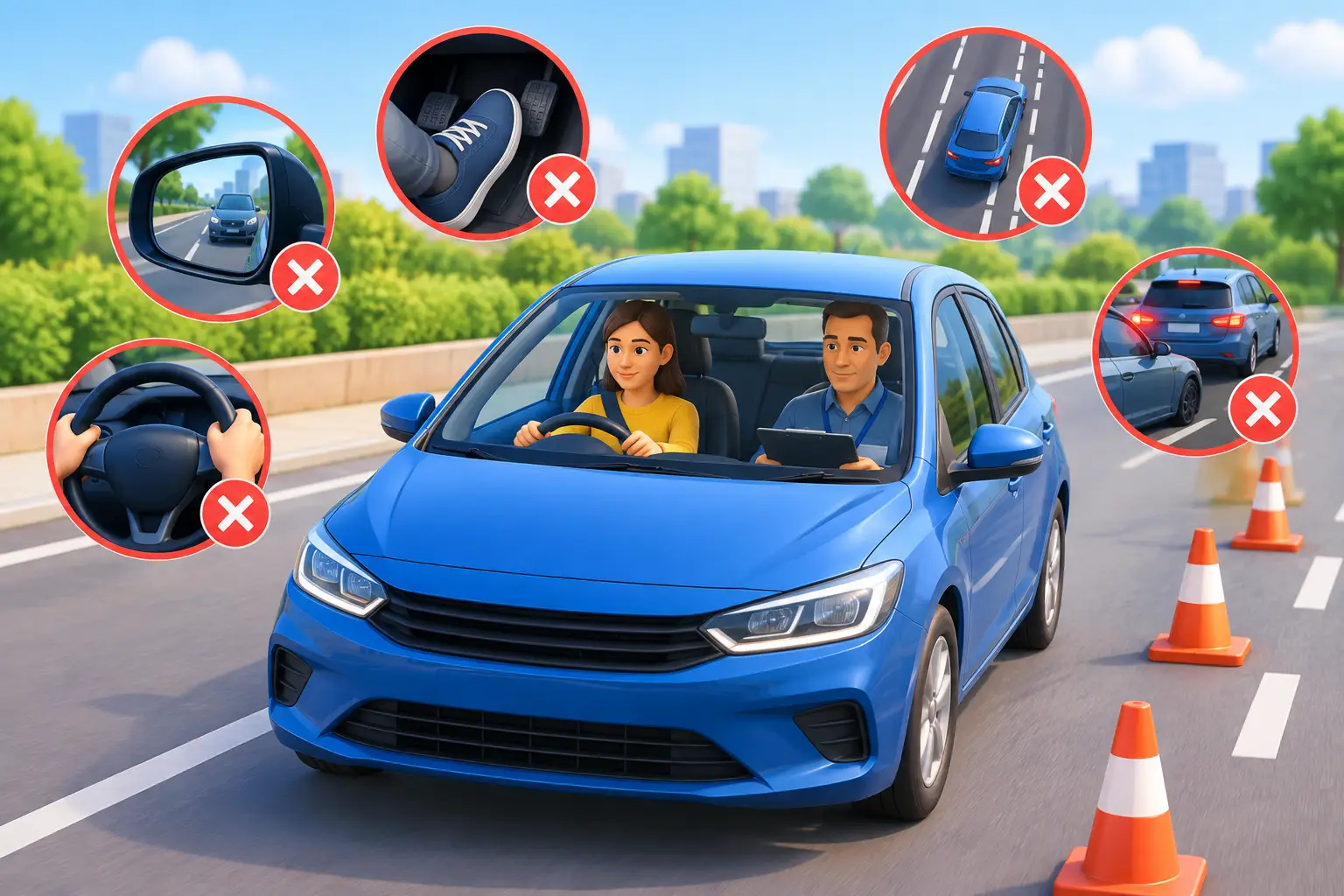
Looking down at the pedals is another common habit. Your feet need to learn through repetition, because your eyes belong on the road. Begin with unhurried practice in a quiet location until the sequence becomes familiar enough that you can keep proper observations.
What driving examiners are looking for
A hill start may be requested during the practical driving test, particularly where the local roads make it appropriate. It is not a separate trick question. It is simply a move-off that shows whether you can control the car safely on an incline.
The key standards are secure control, effective observations and good judgement. You should avoid rolling backwards, stalling through poor control, moving off into the path of another road user or creating unnecessary delay. A slight pause to prepare is far better than moving hurriedly because someone behind is waiting.
It also helps to remember that the test does not demand one identical routine in every car. A manual vehicle with a light clutch may feel very different from a diesel with strong low-speed pull. Your instructor should teach you the underlying control, then give you enough varied practice to use it confidently in the vehicle you will drive on test day.
Build confidence beyond the quiet hill
Once the basic technique is working, progress matters. Try hill starts after stopping at a give way line, behind traffic lights and in slow-moving queues. Practise when it is dry first, then discuss how wet leaves, rain or a heavily loaded car can change the amount of grip and power required.
You should also practise stopping uphill without leaving the car too close to the vehicle in front. A sensible gap gives you room to move away smoothly and reduces pressure if the traffic ahead stops unexpectedly. On a very steep or narrow road, patience is part of the skill. Wait until you have a safe opportunity rather than forcing the car forwards.
At Oxford Driving Academy, one-to-one lessons use calm, expert dual-control tuition so you can practise demanding manoeuvres without feeling rushed. A patient instructor can spot whether the issue is clutch timing, accelerator control, observation or nerves, then focus the next attempts where they will make the biggest difference.
A hill start becomes easier when you stop treating it as a moment to fear and start treating it as a familiar sequence. Secure the car, prepare carefully, observe properly and move away when the vehicle is ready. With practice on real Oxfordshire slopes, that calm control will follow you well beyond the test.