A busy Oxford roundabout, a hill start near Headington or stop-start traffic on the way into the city can feel like plenty to manage before you add a clutch pedal. So, can you take driving lessons in an automatic car? Yes. You can learn, take your practical test and qualify in an automatic vehicle, provided you meet the usual provisional-licence and theory-test requirements.
For many learners, automatic tuition creates a calmer route to driving independently. It removes gear changes and clutch control from the early stages, allowing more attention for steering, observations, positioning and decision-making. But there is one important trade-off: passing in an automatic gives you an automatic-only full licence.
Can you take driving lessons in an automatic car from the start?
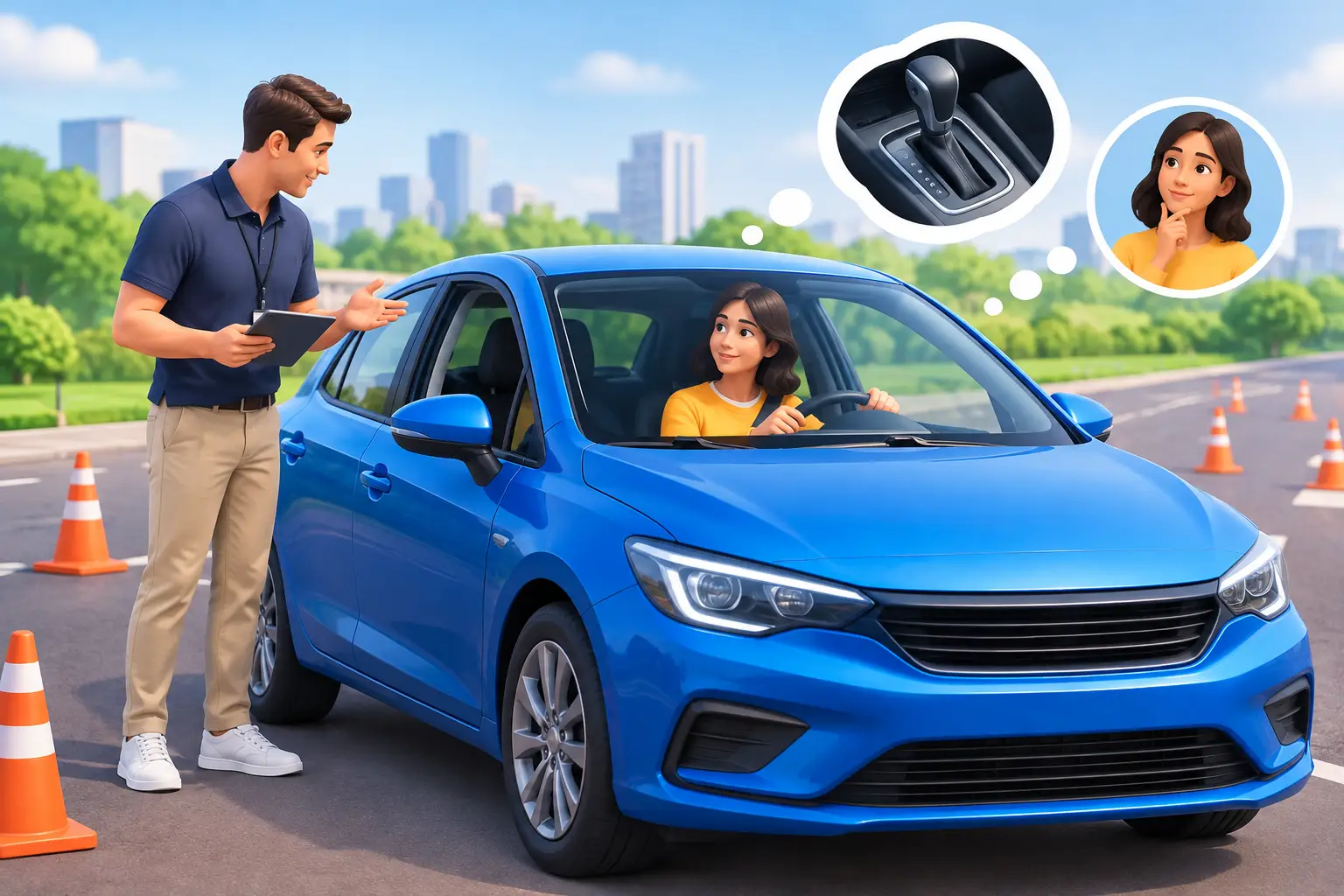
Absolutely. You do not need any previous manual experience to begin automatic lessons. Your instructor will still start with the fundamentals: cockpit drill, moving off safely, steering control, mirrors, signals, road positioning and safe stopping. The difference is that the car selects its own gears.
Most automatic cars use two pedals. Your right foot operates both the accelerator and brake, while your left foot stays out of the way. This is a habit worth building from lesson one, particularly for learners who have driven a manual vehicle before.
Automatic driving is not simply manual driving with fewer things to do. You still need to read the road ahead, judge gaps at roundabouts, plan lane changes, respond to pedestrians and cyclists, and use the correct speed for the conditions. These are the skills that make a safe, independent driver – and they remain central to the DVSA practical test.
What licence will you get after automatic lessons?
If you pass your practical driving test in an automatic car, your full UK licence will be restricted to automatic vehicles. You can drive automatic cars, including many electric vehicles, but you cannot legally drive a manual car on that licence.
If you later decide you need to drive a manual, you can take further manual lessons and pass another practical test in a manual vehicle. You do not need to retake your theory test if it is still valid for the new practical test booking. Once you pass in a manual, you can drive both manual and automatic cars.
Passing in a manual gives you more flexibility, especially if you expect to borrow a family car, use a work vehicle or hire cars where automatics may cost more or be less available. However, the right choice is not always the broadest one. If your priority is gaining confidence, passing safely and driving an automatic car you can access regularly, an automatic licence may be the practical option.
Why learners choose automatic driving lessons
The most obvious advantage is that you do not have to coordinate clutch control with gear selection. For a new driver, that can mean fewer stalls, less pressure on uphill starts and more mental space for the road itself.
This can be particularly helpful on Oxfordshire routes that combine busy junctions, parked cars, buses, narrow residential roads and multi-lane roundabouts. Rather than worrying about selecting the right gear before a gap closes, you can focus on observations, timing and a controlled response.
Automatic lessons can also suit learners who are anxious, returning to driving after a long break, or trying to fit lessons around university, work and family commitments. Progress still depends on regular practice and how quickly you develop safe judgement, but some pupils reach the independent-driving stage sooner when gear changes are no longer a barrier.
There is no guaranteed number of lessons for either transmission. A learner who practises consistently, reflects on feedback and develops sound routines may progress more efficiently than someone who takes longer gaps between lessons. A good instructor will assess your starting point and build a realistic plan rather than promising a pass by a particular date.
Is an automatic car easier to pass in?
Automatic cars are often easier to learn in because there are fewer mechanical tasks to manage. That may help some learners feel more settled and make fewer errors related to stalling, clutch control or incorrect gears.
However, the driving test standard is the same. An examiner still expects you to drive safely, make effective observations, follow signs and markings, deal with traffic appropriately and show independent decision-making. You can still make faults for poor mirror checks, hesitation, incorrect positioning, speeding or failing to respond to hazards.
The best question is not whether automatic is an easy option. It is whether automatic tuition gives you the best conditions to become a safe driver. Confidence matters, but it should be built on genuine skill, not rushed through simply to reach test day.
Automatic lessons and electric cars
Electric cars are generally treated as automatic for licence purposes because they do not have a conventional manual gearbox and clutch. This is one reason automatic training is becoming increasingly relevant. As more drivers move towards electric vehicles, an automatic-only licence will suit many everyday driving needs.
That said, manual cars remain common in the used-car market and among households with older vehicles. Consider the car you are likely to drive after passing, not only the car you will learn in.
What happens in an automatic driving lesson?
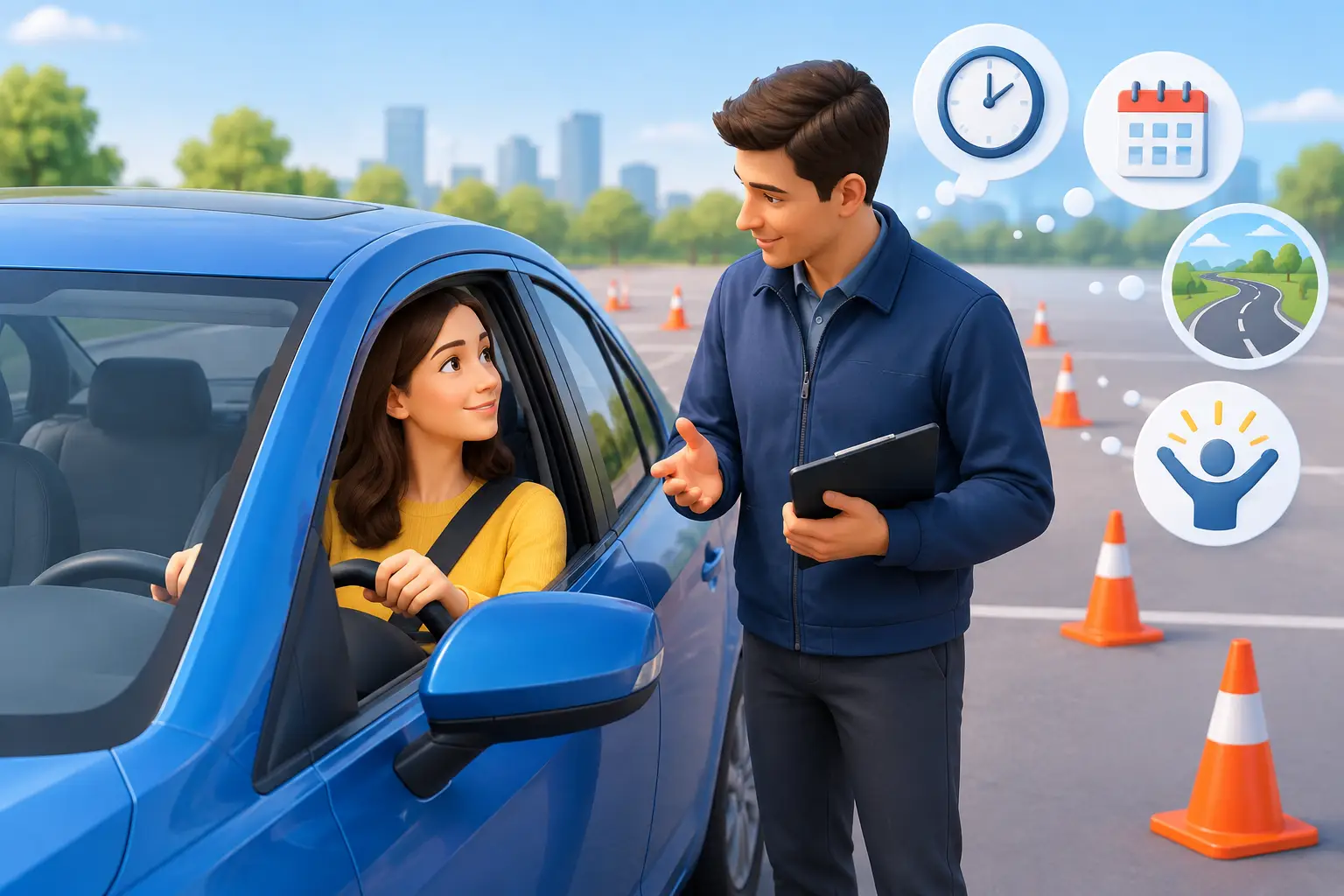
Your first lesson should be structured around your experience and comfort level. In a dual-control car, a DVSA-approved instructor can support the vehicle where needed while you learn in a controlled way. You may begin on quieter roads, practising moving off, stopping, gentle turns and basic junction routines before progressing to more demanding situations.
As your control improves, lessons should cover meeting traffic, roundabouts, crossroads, hill starts, dual carriageways where appropriate, manoeuvres and independent driving. You will also need to practise the show-me, tell-me vehicle safety questions used in the practical test.
For local learners, preparation should include the type of roads and decisions you are likely to encounter around Oxford test routes. This does not mean memorising a route. Test routes can change, and real driving requires adaptable judgement. It means becoming comfortable with the road features, lane discipline and traffic patterns common in the area.
Realistic mock tests are useful once you are nearing test standard. They reveal whether your driving stays safe when instructions are limited and nerves are higher. A mock test should lead to clear feedback and a focused plan for the next lesson, rather than a vague verdict that you are or are not ready.
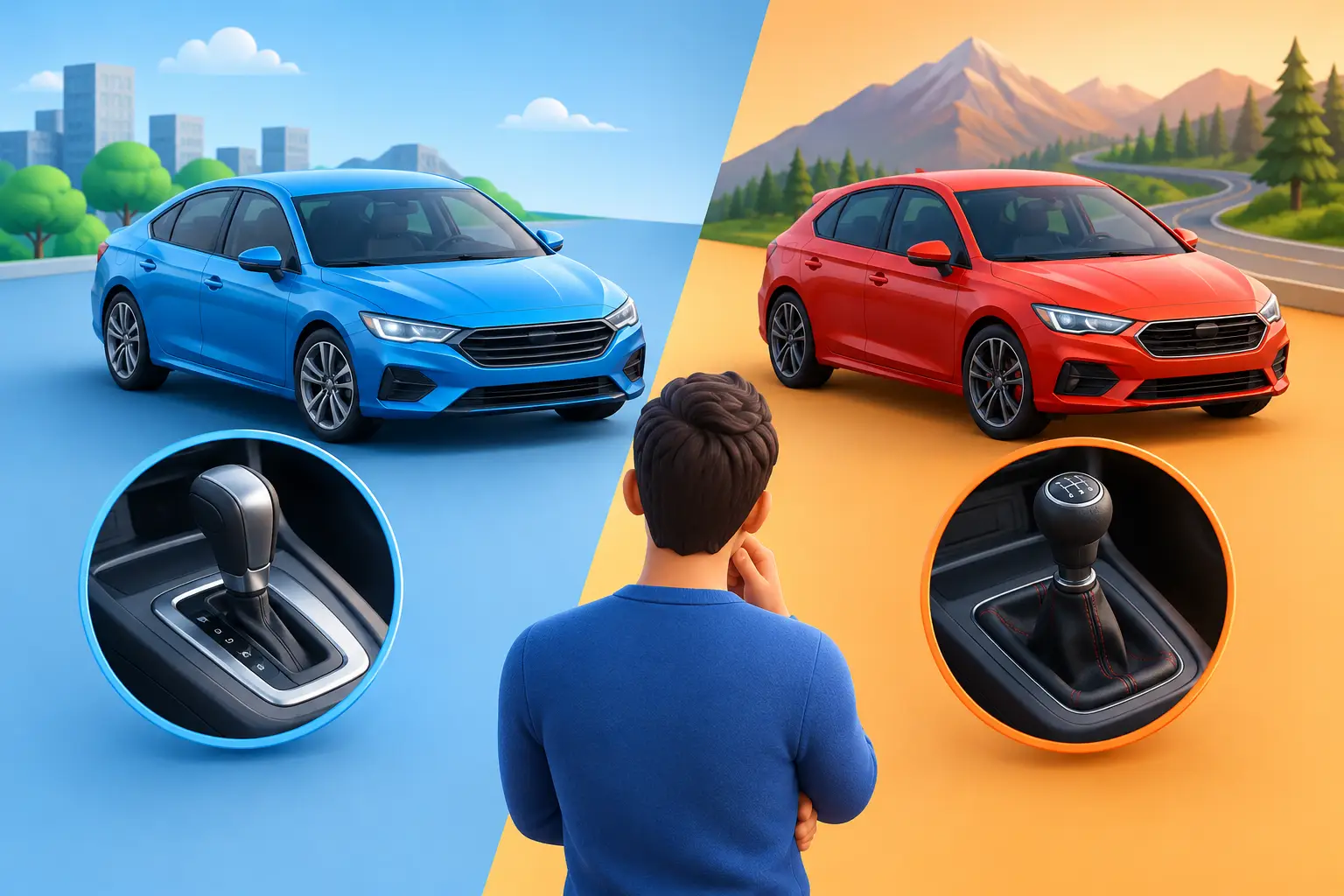
Should you choose automatic or manual lessons?
Choose automatic if you want to reduce the workload of learning, expect to drive an automatic or electric car after passing, or find clutch control is affecting your confidence. It can be a sensible, not second-best, route to independent driving.
Choose manual if you want the widest possible choice of vehicles and are comfortable spending extra time developing clutch and gear control. This may be worthwhile if the car available to you is manual, or if work and travel plans make manual access likely.
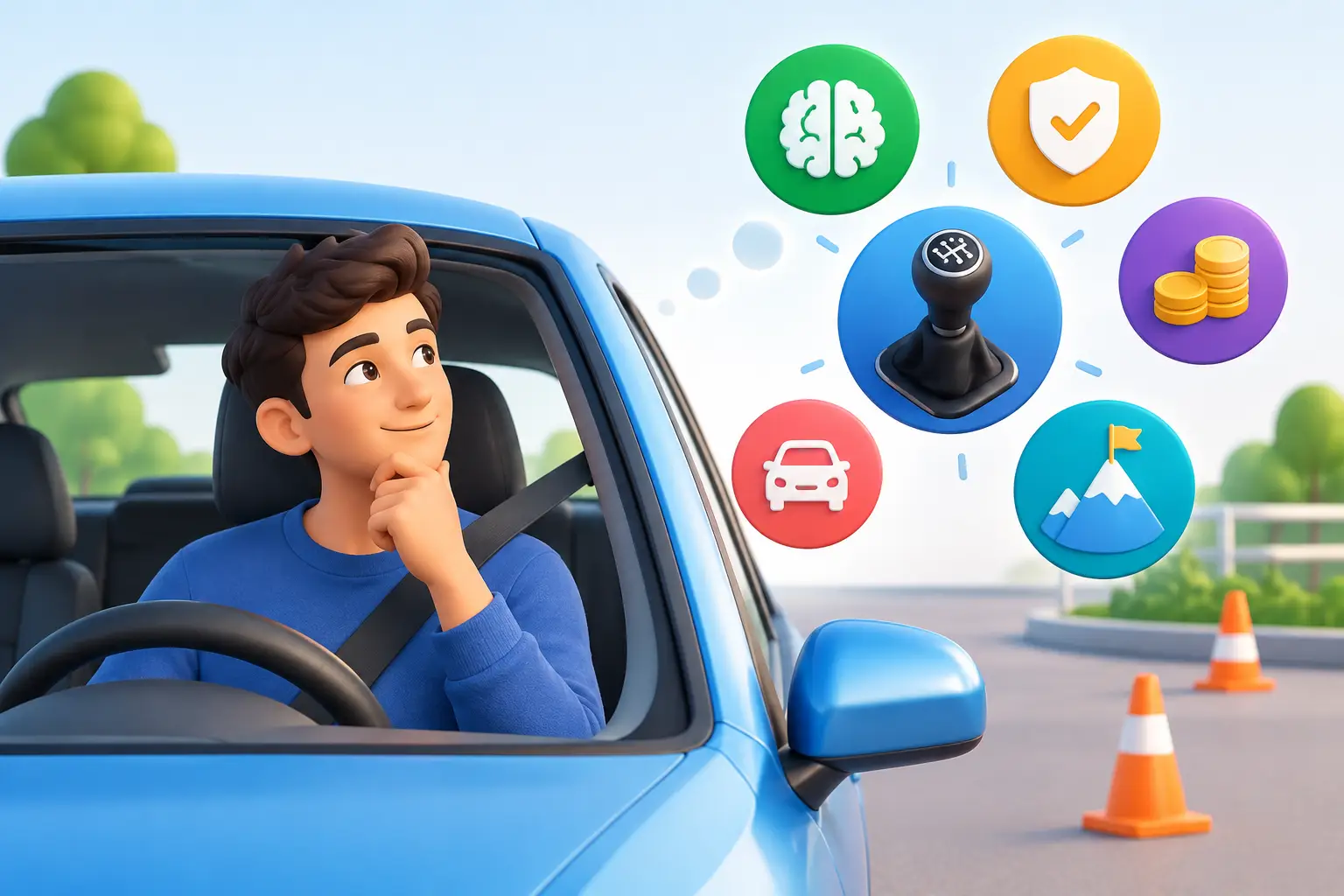
If you are unsure, an honest assessment lesson can help. A patient instructor can explain what feels challenging, what is progressing well and whether the manual route is likely to suit you. At Oxford Driving Academy, one-to-one automatic tuition is designed around steady progress, dual-control safety and the confidence to handle Oxfordshire roads independently.
Your first few lessons do not need to prove that you are naturally good at driving. They need to give you a safe place to learn. Choose the transmission that lets you concentrate, improve consistently and look forward to getting behind the wheel.