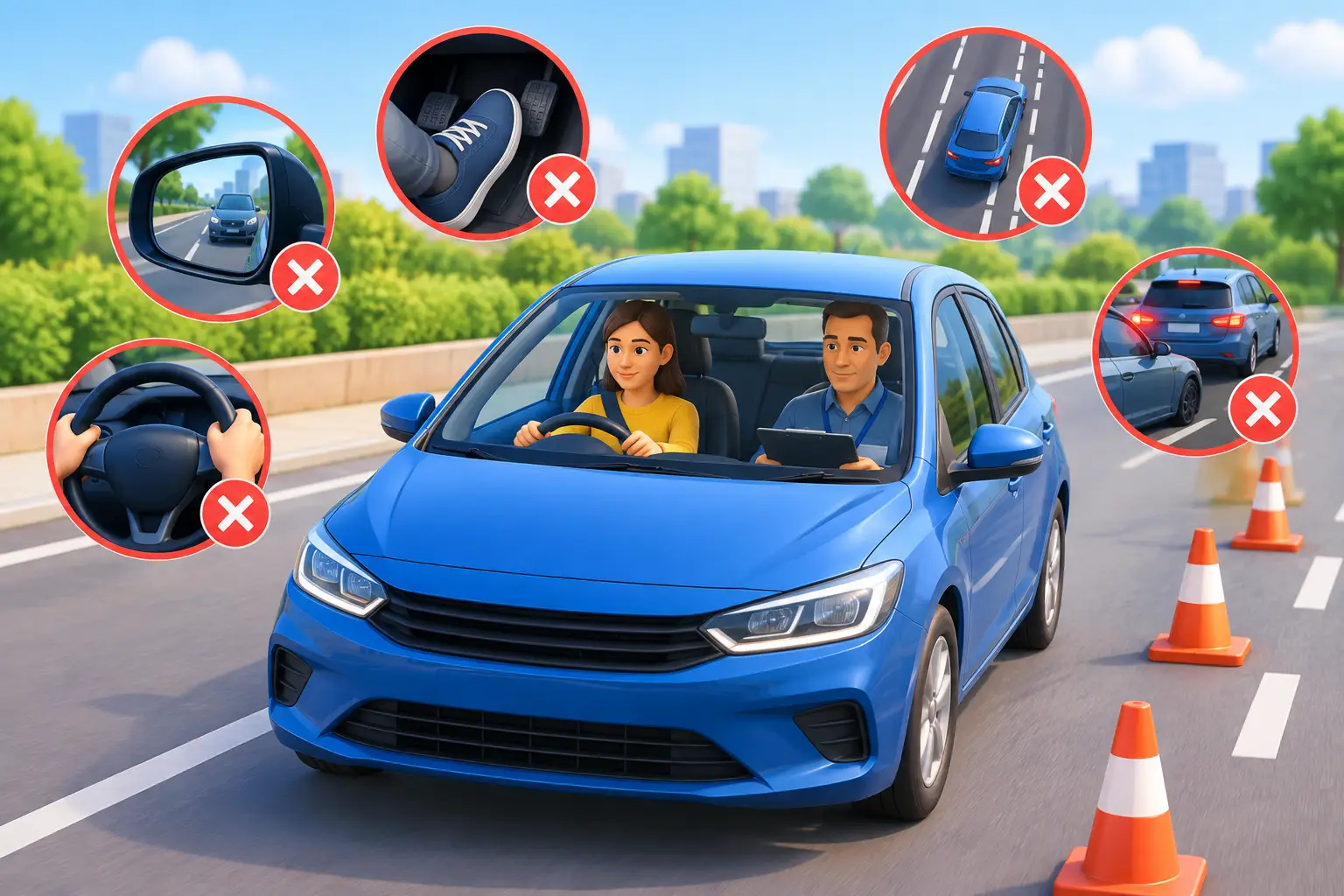
A learner who has never driven may need a very different amount of tuition from someone who has practised regularly with a family member. If you are asking how many lessons needed to pass your driving test, the honest answer is not a fixed number. Your starting point, practice between lessons, confidence, learning style and test readiness all matter.
The good news is that progress is measurable. With calm one-to-one instruction, clear goals and regular practice, you can see exactly which skills are becoming secure and what still needs work before test day.
How many lessons are needed to pass?
The DVSA advises that the average learner takes around 45 hours of professional driving lessons, alongside about 22 hours of private practice. That is a useful benchmark, not a target every learner must reach.
For some people, 25 to 35 hours of professional tuition is enough, particularly if they have safe and frequent private practice. Others may need 50 hours or more. There is nothing unusual or disappointing about that. Driving is a practical safety skill, and the right amount of training is the amount that lets you drive independently, consistently and safely.
A lesson total should never be based on a promise that you will pass by a certain hour. It should be based on whether you can deal with real roads without your instructor stepping in, prompting you through each decision or correcting recurring faults.
Your experience before your first lesson
If you are completely new to driving, the early lessons will cover vehicle controls, moving off and stopping safely, steering, changing gears in a manual car, basic junction routines and road positioning. These foundations take time because they need to become natural before you can focus fully on traffic, signs and hazards.
Learners who have driven before may settle into the car more quickly, but previous experience is only helpful when it is safe and correctly structured. For example, a learner who has practised in an automatic may need extra time if moving to a manual licence, particularly for clutch control, gear selection and hill starts.
Practice between lessons
Private practice can make a significant difference when it is regular, legal and well supervised. Repeating the skills covered in your lesson helps you build control and confidence without spending the next session revisiting the same basics.
Quality matters more than simply adding miles. Driving the same quiet route repeatedly can help at first, but test-ready driving also means coping with busy roundabouts, meeting traffic on narrow roads, changing speed limits, parking areas and unfamiliar directions. A supervising driver should be patient, insured and willing to follow the approach your instructor has taught.
If private practice is not possible, you can still pass through professional lessons alone. It may simply be sensible to allow more time for repetition and consolidation.
Manual or automatic lessons
Automatic lessons often allow new drivers to focus sooner on observation, planning and steering because there is no clutch or gear-changing routine. Some learners therefore reach test standard in fewer hours in an automatic car, especially if coordinating several tasks at once makes them anxious.
That does not make automatic driving an easier option in every respect. You still need sound judgement at junctions, safe lane discipline, effective mirror checks, controlled manoeuvres and the ability to respond to hazards. An automatic-only licence also restricts you to automatic vehicles unless you later pass a manual test.
Manual lessons can take longer at the beginning, but they provide a full manual licence and may suit learners who want more choice of vehicles. The best route is the one that helps you learn safely and consistently, not the one that appears quickest on paper.
What Oxford roads can add to your learning time
Oxford and the wider Oxfordshire area offer excellent real-world practice, but they can be demanding for new drivers. Busy roundabouts, bus lanes, cyclists, complex lane markings, pedestrian crossings and changing traffic conditions all require careful observation and forward planning.
This is why test-route familiarity is useful, although it is not a shortcut. You should be able to read the road rather than memorise a route. Practising local features helps you recognise common challenges, such as approaching the correct lane early, managing multi-lane roundabouts without rushing, and keeping appropriate clearance when passing parked cars or cyclists.
Learners who live in quieter villages may need additional experience in busier areas. Equally, someone who only drives in city traffic may need practice on faster rural roads, where bends, meeting vehicles and changing speed limits demand a different kind of planning.
A realistic route from beginner to test-ready
Most learners move through clear stages. At first, you are learning to control the car. Next, you combine those controls with safe routines at junctions, roundabouts and crossroads. Later, the focus shifts to independent driving, manoeuvres, dual carriageways where appropriate, and making good decisions when conditions change.
The final stage is not about being perfect. It is about being safe, legal and in control without regular assistance. You may make a minor error and still be a capable driver, but you must show that you can notice problems, respond calmly and avoid putting yourself or others at risk.
A well-planned course also includes mock tests. These reveal whether nerves affect your driving, whether you can follow sat-nav directions while maintaining good observation, and whether the same faults appear when you do not know what is coming next. A realistic mock test is more useful than booking the practical test simply to “see what happens”.
Signs you are ready to book your test
Your instructor should give you a direct, evidence-based view of your readiness. Before booking, you should normally be able to drive for a full lesson with only occasional guidance, including on unfamiliar roads.
You should manage meeting traffic, emerging, roundabouts and lane changes with effective observation. Your manoeuvres should be controlled, not rushed. You should also be able to follow directions independently, respond safely when another road user behaves unexpectedly and recover from a small mistake without losing concentration.
Being nervous does not mean you are not ready. Most learners feel pressure before a driving test. The key question is whether nerves make your driving unsafe or whether you can use the same routines that work in lessons to settle yourself and stay focused.
Can an intensive course reduce the number of lessons?
An intensive course can reduce the calendar time needed to learn, but it does not remove the need to build skill. Ten days of focused tuition may suit a learner who can commit fully, absorb feedback quickly and has already passed their theory test. It can also work well for someone with previous experience who needs to refresh and polish their driving.
For a complete beginner, an intensive course is demanding. Several hours behind the wheel each day can be tiring, and some learners benefit more from time between lessons to reflect and practise. There is a trade-off between speed and mental breathing room.
Oxford Driving Academy can tailor lesson frequency around your experience, availability and target date, rather than placing every learner into the same package. Whether you learn weekly or choose a more concentrated course, the priority remains the same: becoming safe enough to drive independently after the test.
Focus on progress, not a magic number
Comparing your lesson count with a friend’s is rarely helpful. One person may have access to a car at home, another may be managing lessons around university or shift work, and another may need extra time to overcome driving anxiety. None of those circumstances predicts how capable you will be once you have a full licence.
Ask for clear feedback after each lesson: what you have improved, which faults still need attention and what to practise next. When your driving is calm, consistent and independent across a range of roads, you are much closer than any lesson number can tell you. Passing matters, but the real goal is leaving the test centre ready to drive with confidence.