A five-star score can look reassuring when you are eager to get on the road, but driving school ratings only tell part of the story. The most useful reviews explain how an instructor teaches, how they handle nerves, whether lessons are reliable and whether pupils felt genuinely ready to drive independently – not simply ready to pass a test.
For learners in Oxford and Oxfordshire, the right school should offer more than a promising number beside its name. You need clear pricing, DVSA-approved instruction, a safe learning environment and a plan that suits your starting point, whether you have never sat in the driver’s seat or need to pass within a tight deadline.
What driving school ratings can tell you
Ratings are a quick way to see whether a school has consistently left pupils feeling supported. A high average built from a healthy number of recent reviews is usually more meaningful than a perfect score based on only a handful of comments. Look at when reviews were posted, too. A school that receives positive feedback over months or years is showing a more reliable standard than one with a sudden burst of reviews.
The written comments matter more than the headline rating. A useful review often mentions specific outcomes: a patient explanation of clutch control, help with busy roundabouts, calm support before a test or lessons that fitted around work and university commitments. These details show what the tuition may feel like from the passenger seat.
Pay attention to patterns. If several learners mention punctuality, clear feedback and growing confidence, that is encouraging. If multiple people refer to cancelled lessons, unclear charges or feeling rushed, do not dismiss it as one unhappy customer. Every business can receive an occasional poor review, but repeated concerns deserve a direct question before you book.
Read beyond the pass photo
A first-time pass is a brilliant achievement, and it is natural for schools to celebrate successful pupils. However, photographs of test certificates do not show the full teaching experience. A learner may pass quickly because they already had experience, while another may need more time to build observation, planning and judgement safely.
When comparing driving school ratings, look for reviews from pupils whose circumstances resemble yours. An anxious beginner may value a different approach from a confident learner booking an intensive course. If you are choosing between manual and automatic lessons, seek comments that explain how the instructor adapted their teaching to that choice.
Oxford presents practical challenges that are worth considering. Learners may need confidence with complex roundabouts, busier city-centre traffic, narrow residential roads, cyclists, hill starts and changing speed limits. Reviews that mention local test-route knowledge can be helpful, but route familiarity should support good driving habits, not replace them. The goal is to become safe on unfamiliar roads as well as familiar ones.
Look for evidence of patient, structured teaching
The best instructors do not fill every minute with instructions. They explain the reason behind a manoeuvre, let you practise it and give you time to correct mistakes. In reviews, phrases such as “calm”, “patient”, “clear” and “never made me feel silly” can be meaningful, particularly for nervous learners.
That said, patience should not mean vague lessons. Strong tuition also includes honest progress updates. You should know what you are working on, what is improving and what still needs practice. A good instructor will not promise a pass by a particular date when your driving does not yet support it. Equally, they should not keep you in lessons without explaining why further training is needed.
Check the details a star rating cannot show
Before choosing a school, use ratings as a starting point, then check the practical information yourself. The school should make it easy to understand its lesson prices, block-booking terms, cancellation policy and any travel surcharge that applies outside its usual area. Transparent information protects your budget and prevents an awkward surprise later.
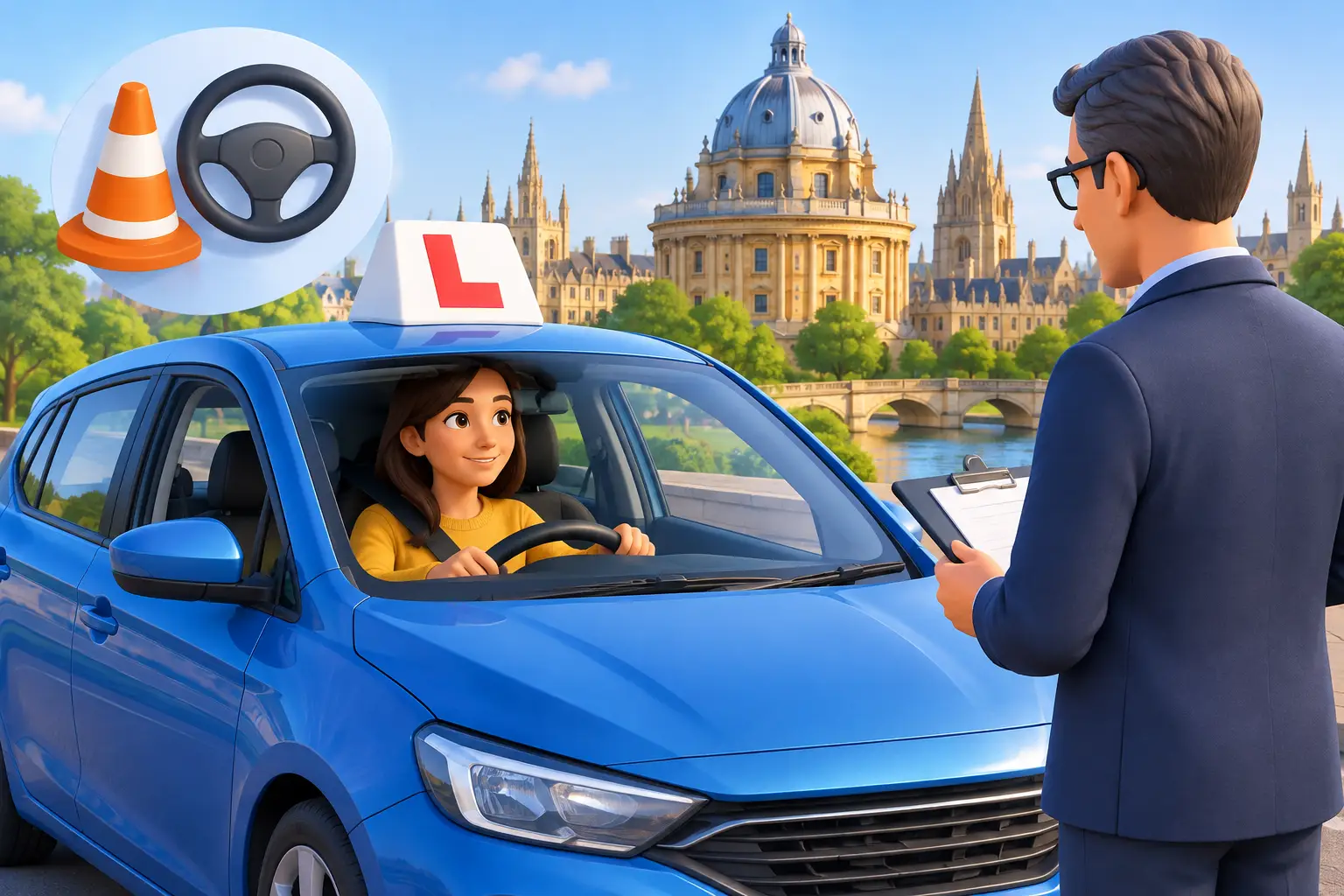
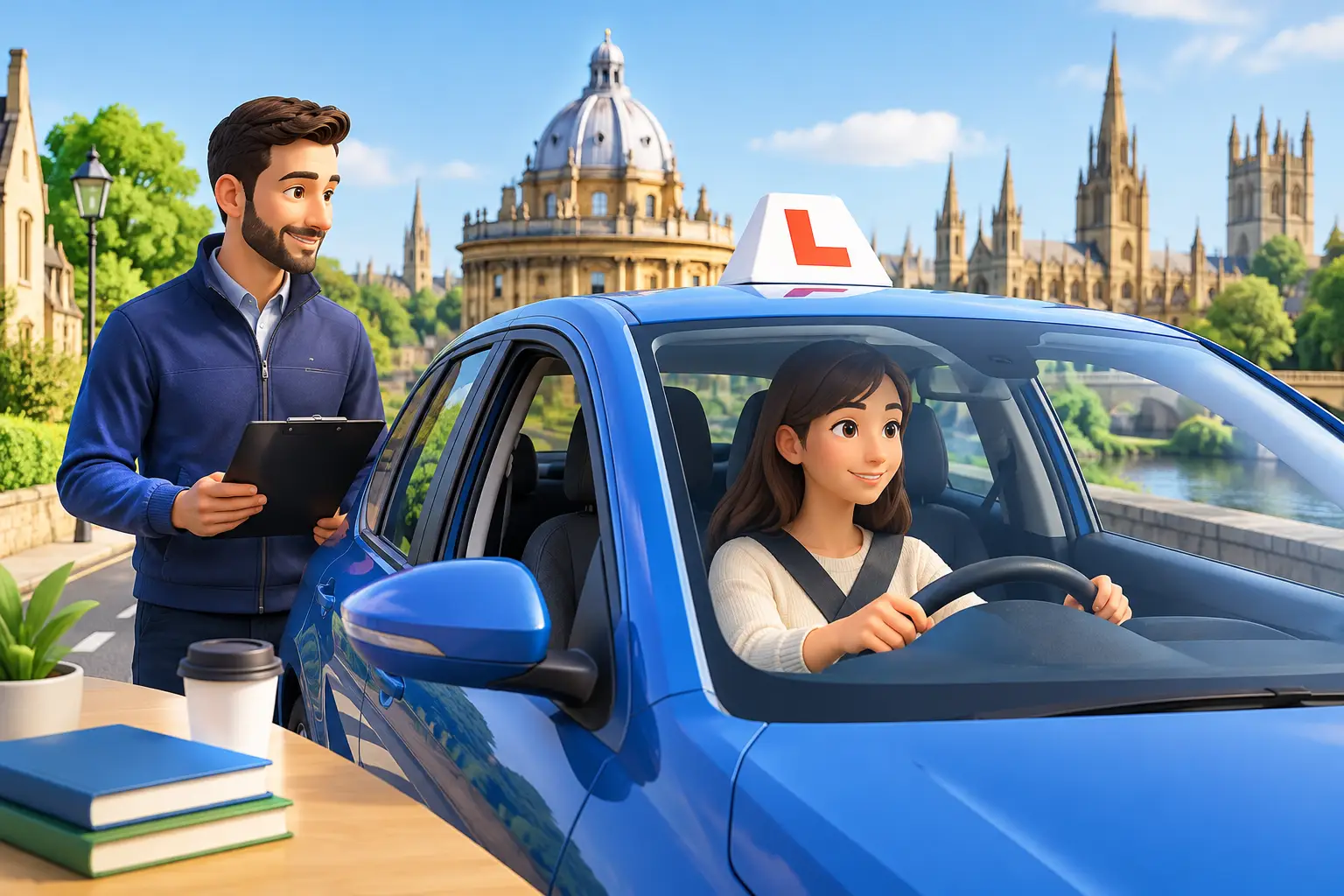
You should also confirm that your instructor is DVSA-approved. An Approved Driving Instructor has completed the required training and is assessed against national standards. A trainee instructor can still provide valuable lessons, but they should be clearly identified and display the appropriate licence. If you are unsure, ask directly.
Dual controls are another sensible question. A dual-control car gives the instructor an extra brake and clutch where fitted, allowing them to intervene if necessary. This is particularly reassuring during your first lessons, when judging spaces and responding to other road users can feel overwhelming.
Availability matters as well. Evening, weekend and seven-day scheduling can make lessons more realistic if you are managing lectures, shifts or family commitments. Yet faster is not always better. An intensive course can work well for a learner who can focus fully and has enough prior knowledge, but it can feel pressured if you are still developing basic coordination. The right pace depends on your confidence, availability and how quickly you retain new skills.
Questions to ask before you book
A short conversation can reveal more than another hour spent scrolling through reviews. Ask whether you will have one regular instructor, how they assess your current level and how lessons are planned around your goals. If your test date is already booked, ask for a realistic view of the preparation required rather than a guaranteed outcome.
It is also worth asking how mock tests are used. A proper mock test should feel close to the real thing, with independent driving, clear directions and feedback linked to the driving test marking criteria. It should identify gaps without knocking your confidence. One difficult mock test is not failure – it is useful information while there is still time to practise.
For manual tuition, ask how the instructor introduces clutch control, moving off and hill starts. For automatic lessons, ask how they build early confidence without allowing you to neglect observation and planning. The pedals may be simpler, but the road skills required for a full licence remain just as important.
If you live outside central Oxford, confirm doorstep collection and drop-off arrangements before paying. A school may serve your postcode but apply a fair travel charge for longer distances. Knowing this upfront makes it easier to compare the real cost of your options.
How to spot reviews that are genuinely useful
Not every review needs to be long to be credible. A brief thank-you after passing can still be genuine. However, the strongest reviews normally include a few concrete details: the learner’s starting point, the skill they struggled with, how the instructor helped and what changed by the end of the course.
Be cautious with reviews that sound unusually similar or make sweeping promises without specifics. You do not need to become a detective, but you should trust evidence over marketing language. A school should be comfortable discussing its approach, prices and availability openly, not rely on star ratings alone to answer every question.
It can also help to read lower-rated feedback first. Consider whether the complaint relates to something that would affect you. A learner unhappy about a limited slot may have booked at a busy time; a concern about communication or unexpected costs is more serious if it appears repeatedly. Context matters, but so does accountability. A professional school responds calmly and respectfully when problems arise.
Choose the support that helps you keep progressing
The right school is not necessarily the cheapest, nearest or highest rated. It is the one that can teach you safely, communicate clearly and keep your progress moving forward. For some learners, that means weekly manual lessons with time to reflect between sessions. For others, it may mean an automatic intensive course, practical mock tests and a structured plan towards an upcoming test.
At Oxford Driving Academy, learners can expect one-to-one DVSA-approved tuition, dual-control vehicles and lessons built around individual progress. But whichever school you choose, make your decision after looking past the stars. Read the detail, ask direct questions and choose an instructor whose teaching style gives you the confidence to make safe decisions when nobody is sitting beside you.