Passing your test in an automatic can be a brilliant route to independence, particularly if busy Oxford roads, hill starts or clutch control are making learning feel harder than it needs to be. However, automatic licence restrictions are worth understanding before you book your practical test. They do not stop you driving independently, but they do affect the types of car you may legally drive after passing.
For many learners, an automatic-only licence is the right decision. The key is choosing it because it suits your driving plans, rather than because the restriction has not been explained clearly.
What automatic licence restrictions mean
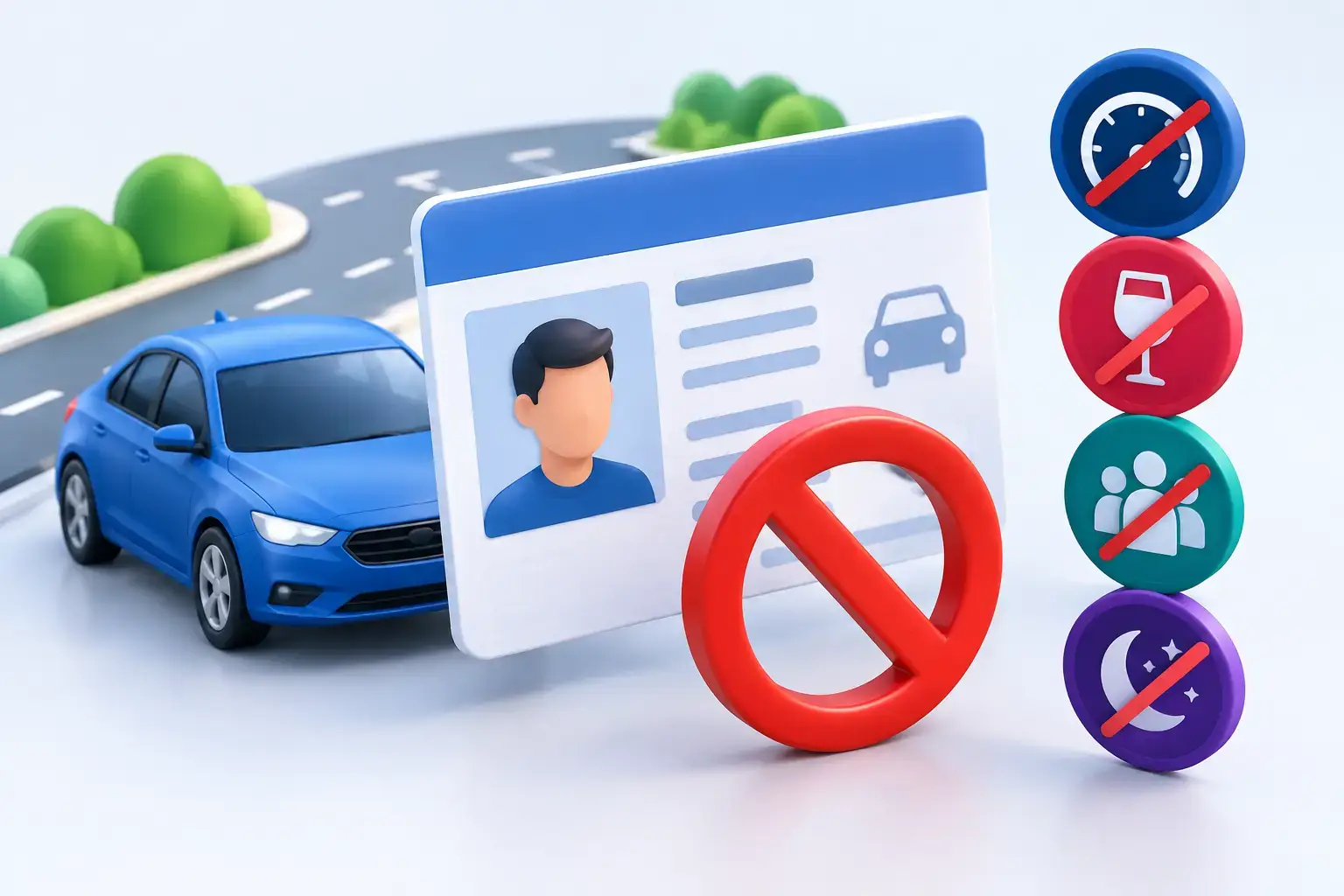
If you pass your practical driving test in an automatic car, your full licence will be restricted to automatic vehicles. This is usually shown by code 78 on your driving licence, meaning you cannot drive a manual car on that licence.
A manual licence works differently. Passing your test in a manual vehicle allows you to drive both manual and automatic cars, provided you are insured and meet all the usual legal requirements.
The restriction applies after you pass, not just during lessons. You can still own a car, drive to work, take passengers and travel across the UK with an automatic licence. The limitation is simply that a traditional manual car with a clutch pedal is not permitted.
Automatic does not mean less of a licence
An automatic licence is a full UK driving licence for the vehicles it covers. You take the same theory test and the same standard practical driving test. You still need to demonstrate safe observation, good judgement, controlled steering, effective use of mirrors, correct positioning and independent driving.
The examiner does not lower the standard because the car has no clutch. You must still handle roundabouts, meeting traffic, busy junctions, pedestrian crossings and changing road conditions safely. In Oxford, that can mean staying composed through city-centre traffic, reading lane signs early and making sensible decisions around cyclists and buses.
Is an automatic-only licence right for you?
There is no single best choice for every learner. The right licence depends on your confidence, your likely car choice and how quickly you need to become an independent driver.
Automatic lessons remove clutch control and gear changes from the early learning process. That gives many nervous learners more mental space to focus on the road ahead. Instead of worrying about stalling at a steep junction or selecting the right gear before a roundabout, you can concentrate on speed, steering, planning and observation.
This can be especially useful if you have had difficult experiences in manual lessons, have limited time to learn, or need a licence for work, university or family commitments. Learners taking an intensive course may also find that automatic tuition helps them make faster progress, although a quick pass should never come at the expense of safe, consistent driving.
On the other hand, a manual licence gives you more flexibility. You can drive a wider range of cars, share a manual family vehicle, hire a manual car if needed and apply for roles where a manual licence is expected. This matters more in some jobs than others. Delivery, trade and care roles, for example, may involve manual vehicles, while many office-based drivers will rarely notice the difference.
Electric cars add another consideration. Most are automatic, and the number of automatic and hybrid vehicles on UK roads continues to grow. If you expect to drive an electric vehicle, an automatic licence may fit your plans very well. If you are unsure what you may need to drive in the next few years, manual lessons can offer wider long-term options.
Can you upgrade from automatic to manual?
Yes. Automatic licence restrictions are not permanent. If you pass first in an automatic and later decide you need a manual licence, you can take a further practical driving test in a manual car.
You do not need to retake your theory test if it is still valid for the purpose of booking the original test, and you do not need to start your driving education from the beginning. However, you do need to become safe and test-ready in a manual vehicle before taking the new practical test.
What you will need to learn
Moving from automatic to manual is not only about operating a clutch. You will need to build reliable control of the bite point, smooth pull-aways, gear selection, changing down safely, hill starts and moving off again in slow traffic.
You must also show that your manual control does not distract from the wider driving task. A safe driver checks mirrors before changing speed or direction, keeps an appropriate road position and plans ahead. If your attention is fixed on the gear lever, you are not yet ready for test standard.
The amount of tuition needed varies. Someone who has driven an automatic confidently for a year may progress quickly because their observation and road awareness are already strong. A newly qualified driver may need more time to develop the new physical skills without losing concentration in complex traffic.
A patient instructor will assess where you are, rather than selling a fixed number of hours. At Oxford Driving Academy, manual lessons can be structured around the skills you already have, with dual controls providing reassurance while you practise the parts that feel unfamiliar.
Can you practise in a manual car before the test?
You may be able to practise as a learner in a manual car, but learner-driver rules must be followed. This includes suitable supervision, L plates and valid insurance for the driver and vehicle. The person supervising must meet the legal requirements, and the vehicle must be roadworthy.
For most people, lessons with a DVSA-approved instructor are the most efficient place to start. You can learn clutch control in a calm setting before taking it into demanding situations such as Oxford’s multi-lane roundabouts, stop-start traffic or narrow residential roads with parked cars.
How the restriction affects car choice
Before choosing automatic lessons, think beyond the test date. Ask whether you will have access to an automatic car once you pass. There is little benefit in passing quickly if the only car available at home is manual.
Also consider the cost and availability of insurance. Automatic cars can be straightforward to insure, but premiums are based on many factors including your age, postcode, vehicle group, claims history and annual mileage. Do not assume one transmission type will always be cheaper. Obtain realistic quotes for the specific cars you are considering.
If you are buying a used car, check the vehicle carefully and make sure it is genuinely suitable for your licence. Some hybrids and cars with manual-style controls can be confusing at first glance. When in doubt, confirm the vehicle’s transmission classification before driving it.
Choosing your route with confidence
A driving licence should support your life, not become another source of pressure. If manual lessons are making you anxious or slowing your progress, automatic tuition can be a sensible, practical decision. If maximum flexibility matters to you, investing the time to learn manual may be worthwhile.
Whichever route you choose, focus on becoming a safe driver who can make calm decisions when the road becomes busy, unfamiliar or unpredictable. A licence opens the door, but confident independent driving is what keeps it useful every day.