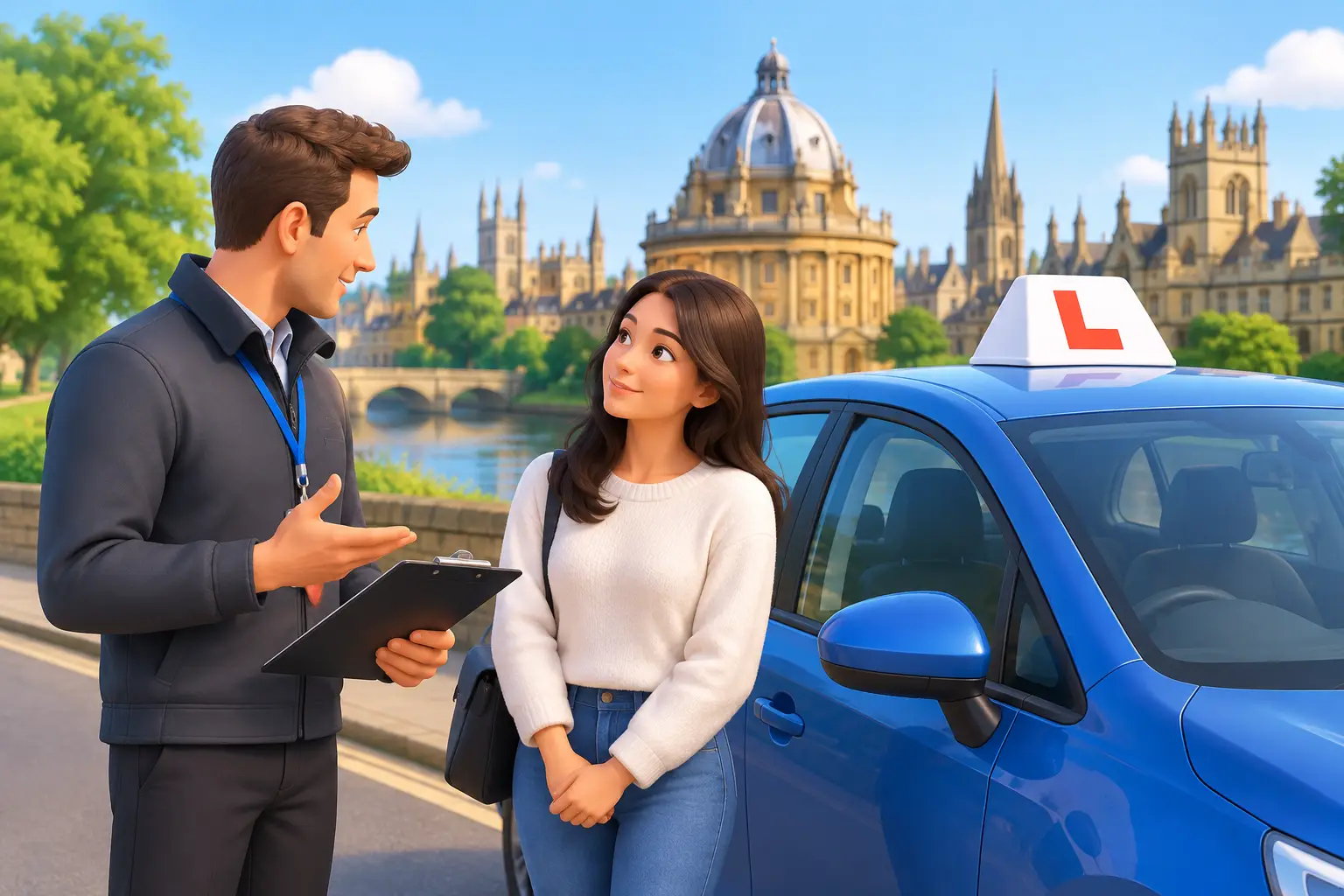
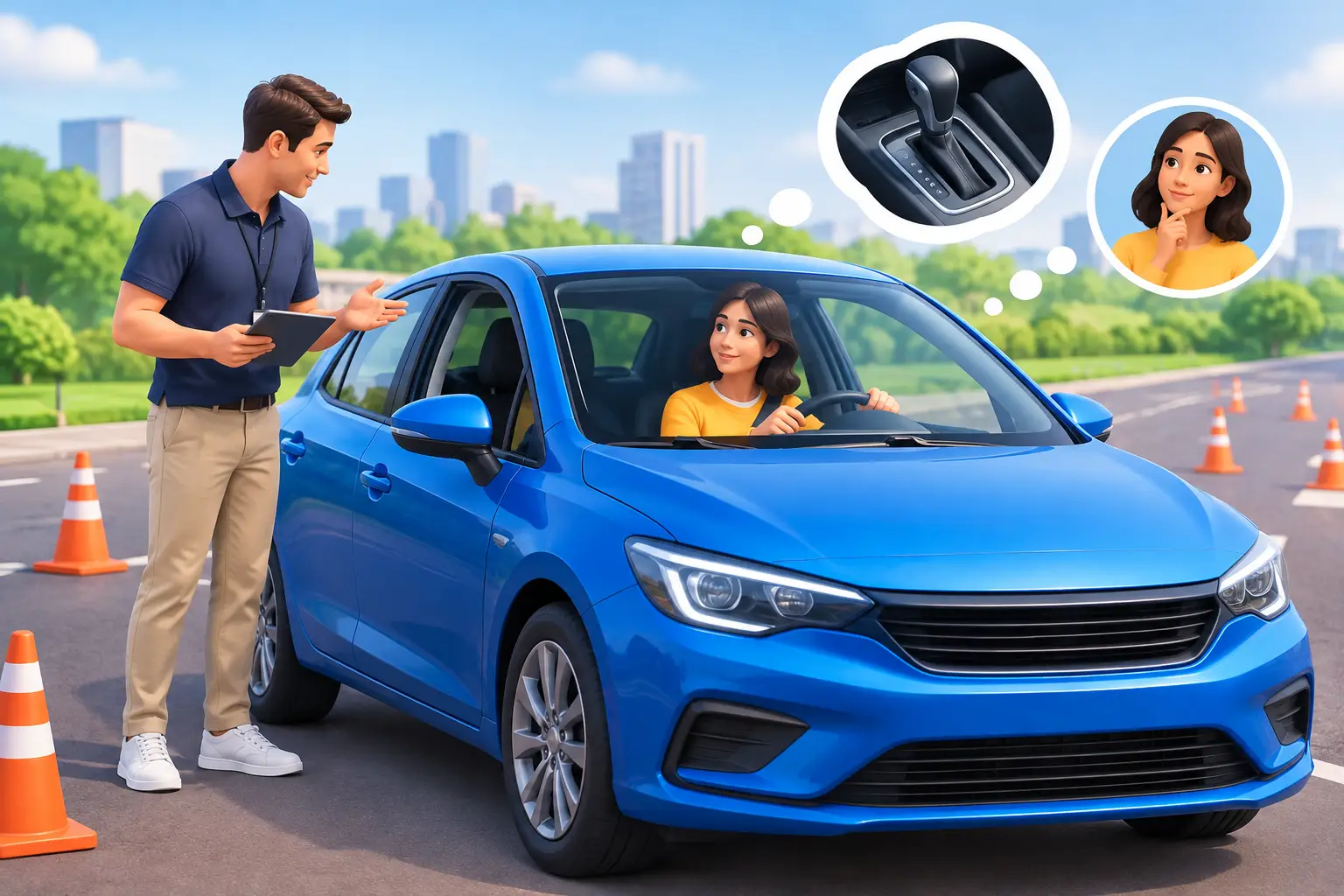
You are waiting at a busy Oxford roundabout, watching cyclists, buses and traffic build around you. The last thing you want is to worry about finding the biting point before you can move safely. That is why many learners ask: is automatic driving worth it? For some, an automatic car makes learning feel calmer and more manageable. For others, the freedom of a manual licence remains the better long-term choice.
The right answer depends on how quickly you need to pass, what makes you nervous, the type of driving you expect to do after your test and whether you are likely to need a manual vehicle later. Automatic is not an easier version of driving. You still need sound judgement, observation and road awareness. It simply removes one technical task from the process.
Is automatic driving worth it for your situation?
Automatic lessons can be an excellent choice when clutch control is taking too much of your attention. In an automatic, the car changes gear for you. There is no clutch pedal, no stalling at a junction and no need to coordinate gear changes while managing a hill start.
That can leave more mental space for the skills that matter most in everyday driving and on the practical test: reading the road, checking mirrors, choosing the correct lane, responding to hazards and making safe progress. On Oxford’s busier roads, this extra capacity can be valuable. Roundabouts, tight residential streets and changing speed limits require concentration even before you add gear selection.
Automatic tuition is often particularly suitable for learners who feel anxious, have had a difficult experience learning in a manual, or need to work towards a test in a limited timeframe. It can also suit people returning to driving after a break, or those who simply want a more straightforward route to independent driving.
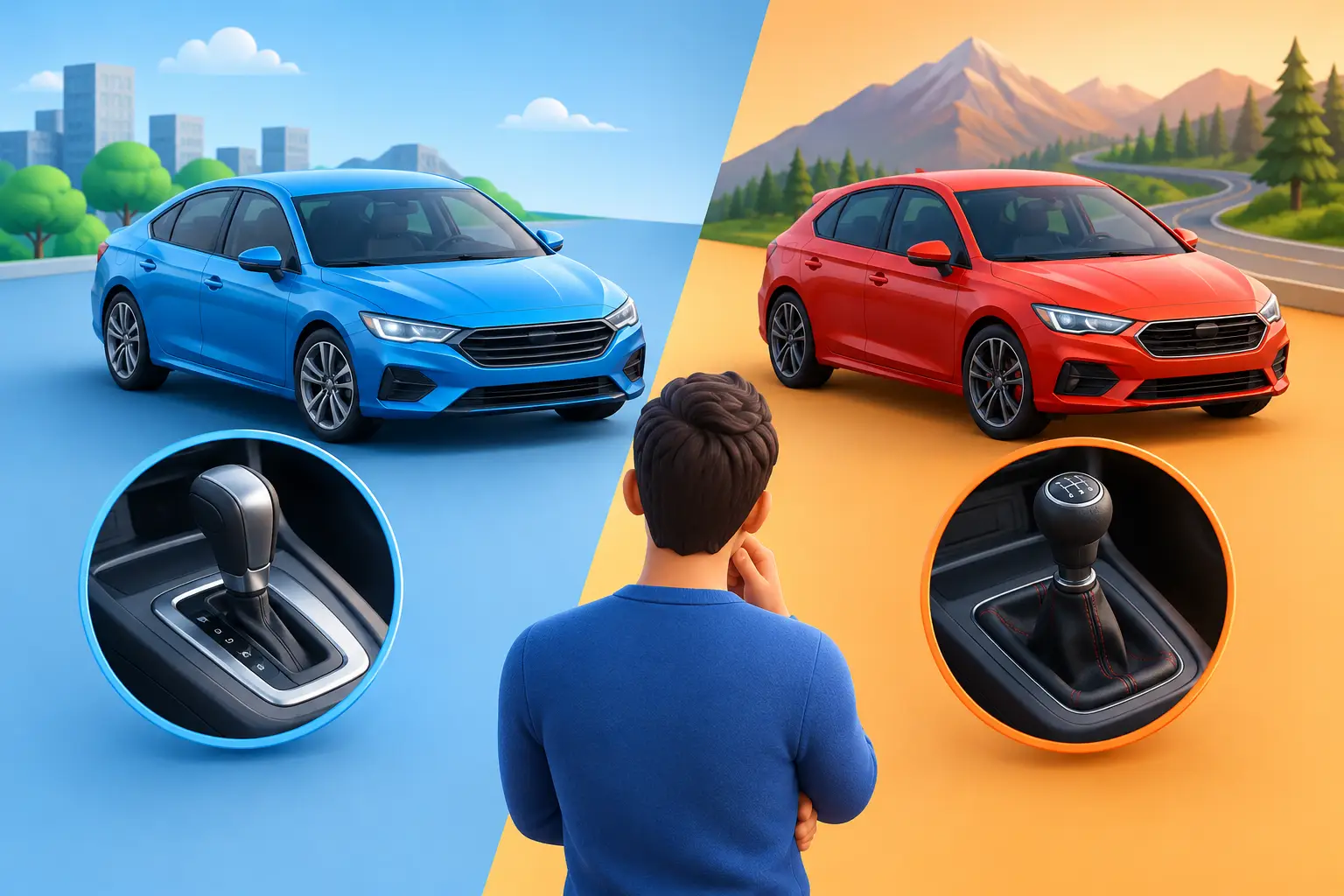
However, automatic is worth it only if the licence restriction works for your future plans. Passing your practical test in an automatic gives you an automatic-only licence. You can drive automatic cars, including electric vehicles, but not manual cars unless you later pass a manual practical test.
The confidence advantage of automatic lessons
A learner who repeatedly stalls may begin to anticipate failure at every set of lights or uphill junction. That can quickly affect confidence, even when their steering, observations and road positioning are improving well. Removing the clutch does not remove the need to learn, but it can stop one frustration from dominating every lesson.
Automatic cars are especially helpful during early lessons. You can begin practising moving off, stopping, approaching junctions and developing steering control without managing gears at the same time. As your lessons progress, the focus moves naturally towards independent driving, meeting traffic safely and planning ahead.
This matters because the driving test does not reward a learner simply for changing gear neatly. Examiners look for safe, controlled decisions. Can you approach a roundabout in the correct lane? Do you react appropriately to pedestrians near a crossing? Are your mirror checks timely? Can you drive independently while following signs or sat nav directions? Automatic tuition gives some learners more opportunity to practise these decisions sooner.
That said, confidence should be built on real competence, not on avoiding difficult roads. A good instructor will still take you through hill starts, larger roundabouts, dual carriageways and the test-route features that need attention. In an automatic, you are free to focus more closely on how you deal with them.
Cost: look at total progress, not just the hourly rate
It is natural to compare the advertised price of a manual lesson with an automatic lesson. Automatic tuition can sometimes cost more per hour because automatic training cars are often more expensive to buy, insure and maintain. But the hourly figure is only part of the picture.
If automatic lessons allow you to develop safe control and confidence in fewer hours, the overall cost may be competitive. There is no guaranteed number of lessons for either transmission, though. Learners progress at different rates depending on previous experience, regular practice, confidence, availability and how consistently they take lessons.
Be cautious of anyone promising that an automatic car will guarantee a quick pass. You still need enough structured practice to meet the DVSA standard. You will need to handle manoeuvres, independent driving, busy traffic and unexpected situations without relying on prompts from your instructor.
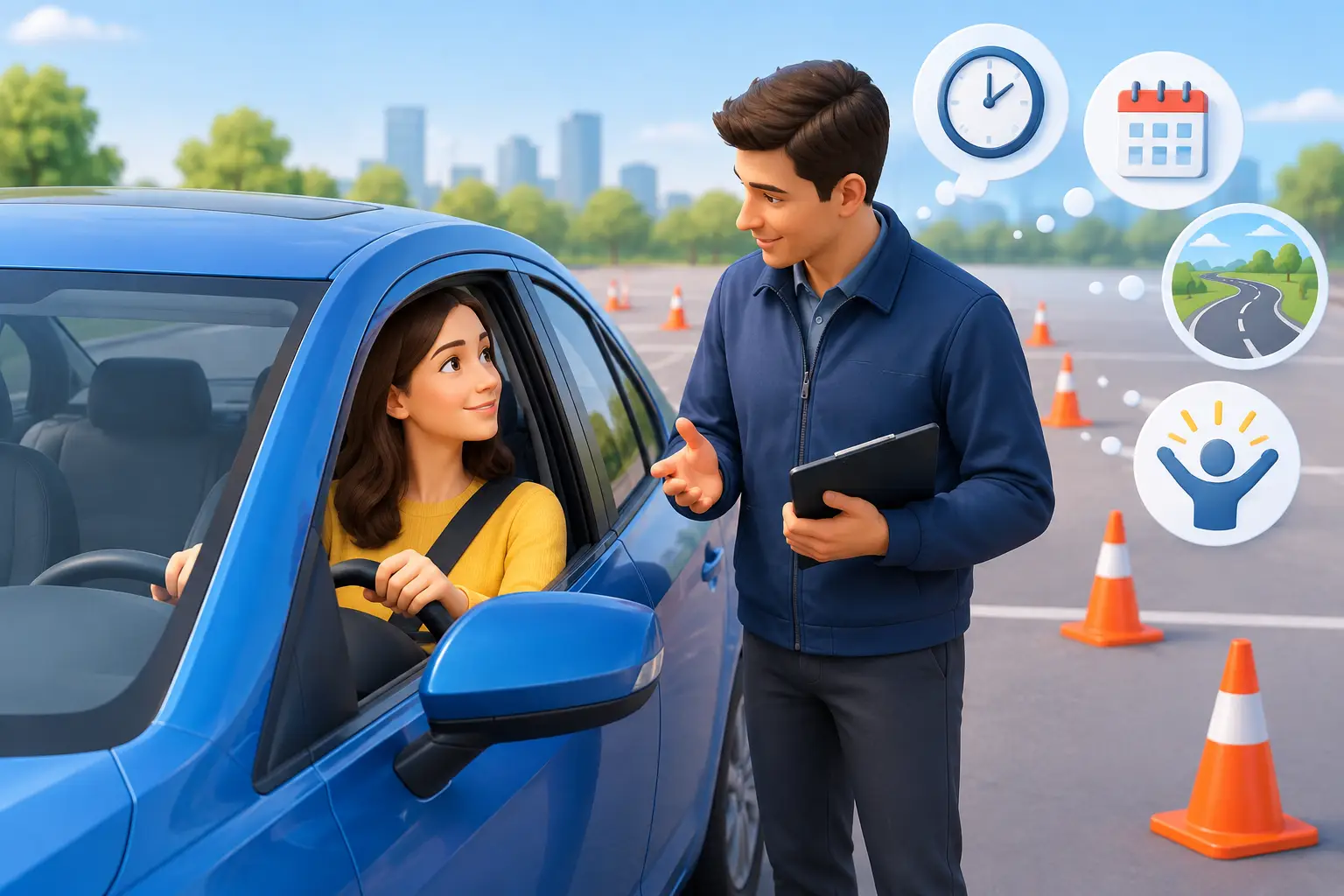
If you are on a tight budget, it may be worth booking an assessment lesson before committing to a large block. An experienced DVSA-approved instructor can identify whether clutch control is genuinely holding you back, or whether a few focused manual lessons could solve the issue. That is a more useful basis for a decision than choosing purely on price.
When a manual licence may be the better investment
A manual licence allows you to drive both manual and automatic vehicles. For some Oxfordshire learners, that flexibility is important. You may need to share a family car, use a manual van for work, hire a cheaper car while travelling, or keep your options open when buying your first vehicle.
Manual driving also gives you direct control over gear selection. Some learners enjoy this and find that, once the basics click, it becomes automatic through practice. If you are progressing steadily with clutch control and do not feel overwhelmed by it, there may be little reason to change direction simply because automatic seems easier.
Think about the next few years rather than only test day. If your household owns a manual car and you expect to practise in it after lessons, passing in a manual may be the practical choice. Equally, if you are likely to drive an automatic or electric car only, paying for manual training you do not need may not serve you well.
The best option is not the one that impresses other people. It is the one that helps you become a safe, confident and independent driver with a licence you can genuinely use.
Automatic cars and the move towards electric driving
The growth of electric and hybrid vehicles has made automatic licences more practical than they once were. Fully electric cars do not have a conventional manual gearbox, and most modern hybrids are automatic too. If you plan to buy or drive an electric vehicle, automatic training matches the vehicle you are likely to use.
Still, the transition on the road is gradual. Manual cars remain common in private households, used-car listings and some workplaces. Availability can also vary depending on your budget, location and insurance options. Do not assume that an automatic-only licence will never limit you. Instead, decide whether that limitation is likely to matter in your own circumstances.
For a university student expecting to live in Oxford without a car for several years, an automatic licence may be entirely sensible. For someone starting a job that could involve driving different company vehicles, a manual licence may offer useful flexibility. Both choices can lead to safe driving independence.
What you will still need to master in an automatic
Automatic learners are sometimes surprised by how much there is to learn once gears are removed. The same test standard applies. You must drive safely, confidently and independently in real traffic.
You will need to develop accurate mirror routines, appropriate speed, gap judgement, lane discipline, anticipation and safe positioning. You will also practise manoeuvres such as parallel parking, bay parking and pulling up on the right before reversing. Emergency stops, pedestrian crossings, country roads and dual carriageways all require sound control and observation.
An automatic also requires careful pedal control. With only two pedals, there can be a temptation to use the left foot for braking. Learners should normally use the right foot for both accelerator and brake, as this supports controlled braking and avoids pressing both pedals by mistake. Your instructor will help you build the correct routine from the first lesson.
A practical way to decide
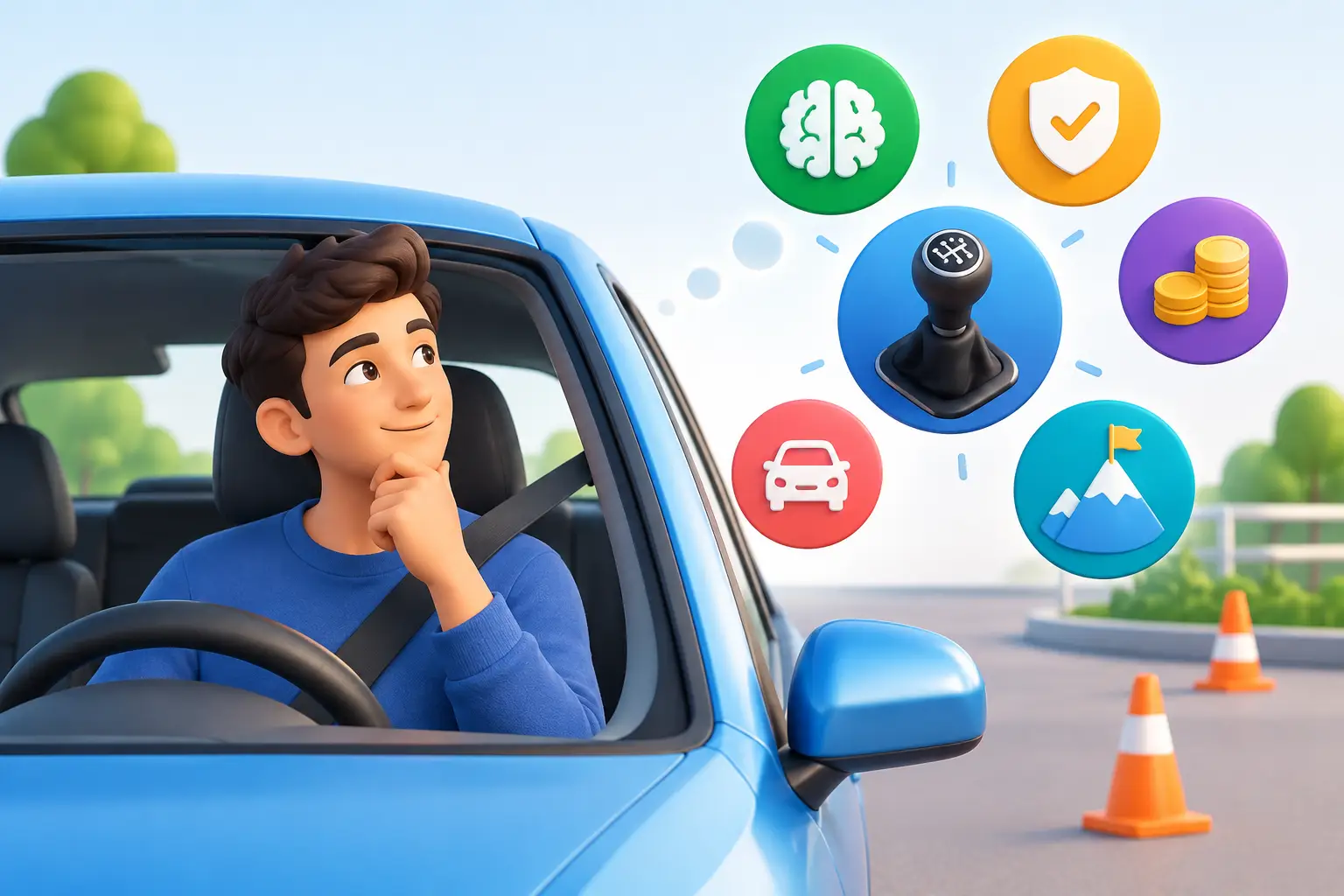
If you are undecided, consider an honest assessment of your priorities. Automatic may be the right route if stalling and gear changes are affecting your confidence, you need to progress efficiently, or you know you will drive an automatic or electric car. Manual may be the better route if you need maximum vehicle choice, have reliable access to a manual car, or are already becoming comfortable with clutch control.
It is also possible to start in automatic and later take a manual test if your needs change. There is no failure in choosing the training route that lets you learn safely now. The key is to make that choice deliberately, with a clear understanding of the licence you will receive.
At Oxford Driving Academy, a calm assessment lesson can help turn this decision into a practical plan, whether you choose automatic or manual tuition. The aim is not merely to get through the test. It is to leave you able to handle Oxfordshire roads with sound judgement and genuine confidence.
Your first licence should make everyday life easier, not create pressure you do not need. Choose the transmission that gives you the best chance to learn well, stay safe and keep moving forward.