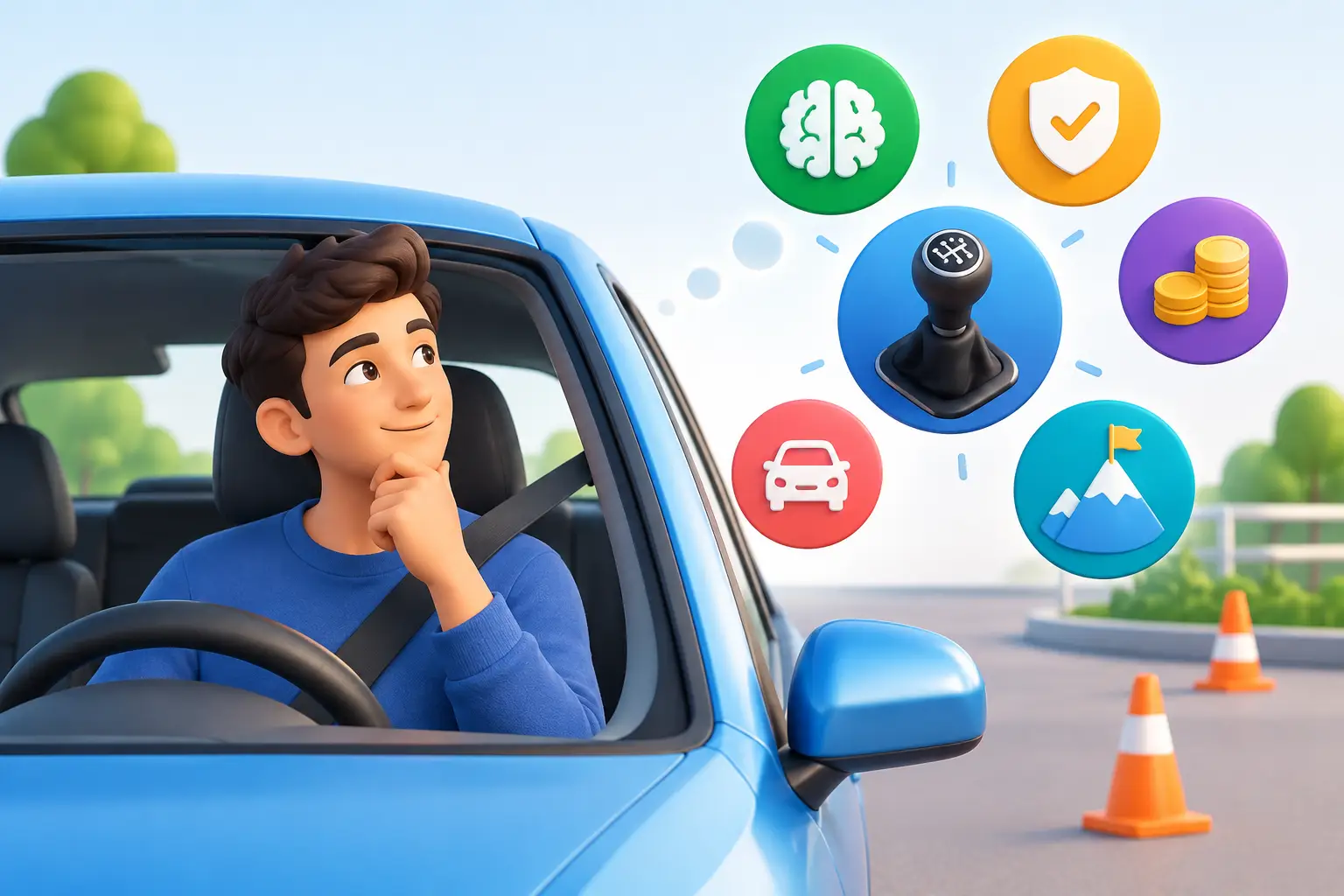
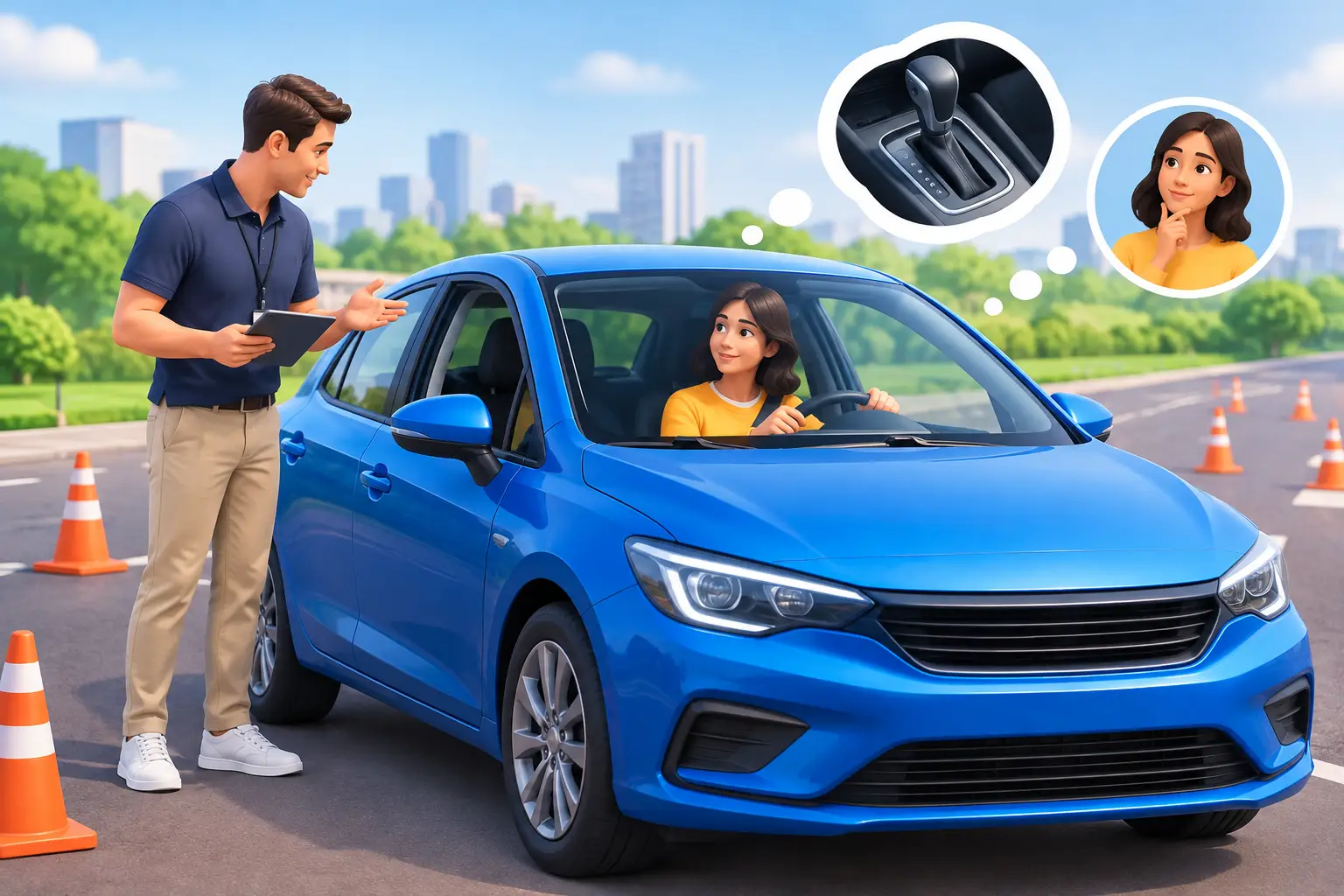
Choosing a gearbox can feel like a bigger decision than choosing a car. The automatic manual differences affect how you learn, what your full licence permits you to drive and how quickly you may feel comfortable on busy Oxford roads. The right choice is not the one other people expect you to make. It is the one that gives you a safe, realistic route to independent driving.
For some learners, manual driving brings flexibility and satisfaction. For others, removing clutch and gear work creates the headspace they need to handle roundabouts, traffic lights and decision-making with more confidence. Both routes require the same care, observation and commitment to safe driving.
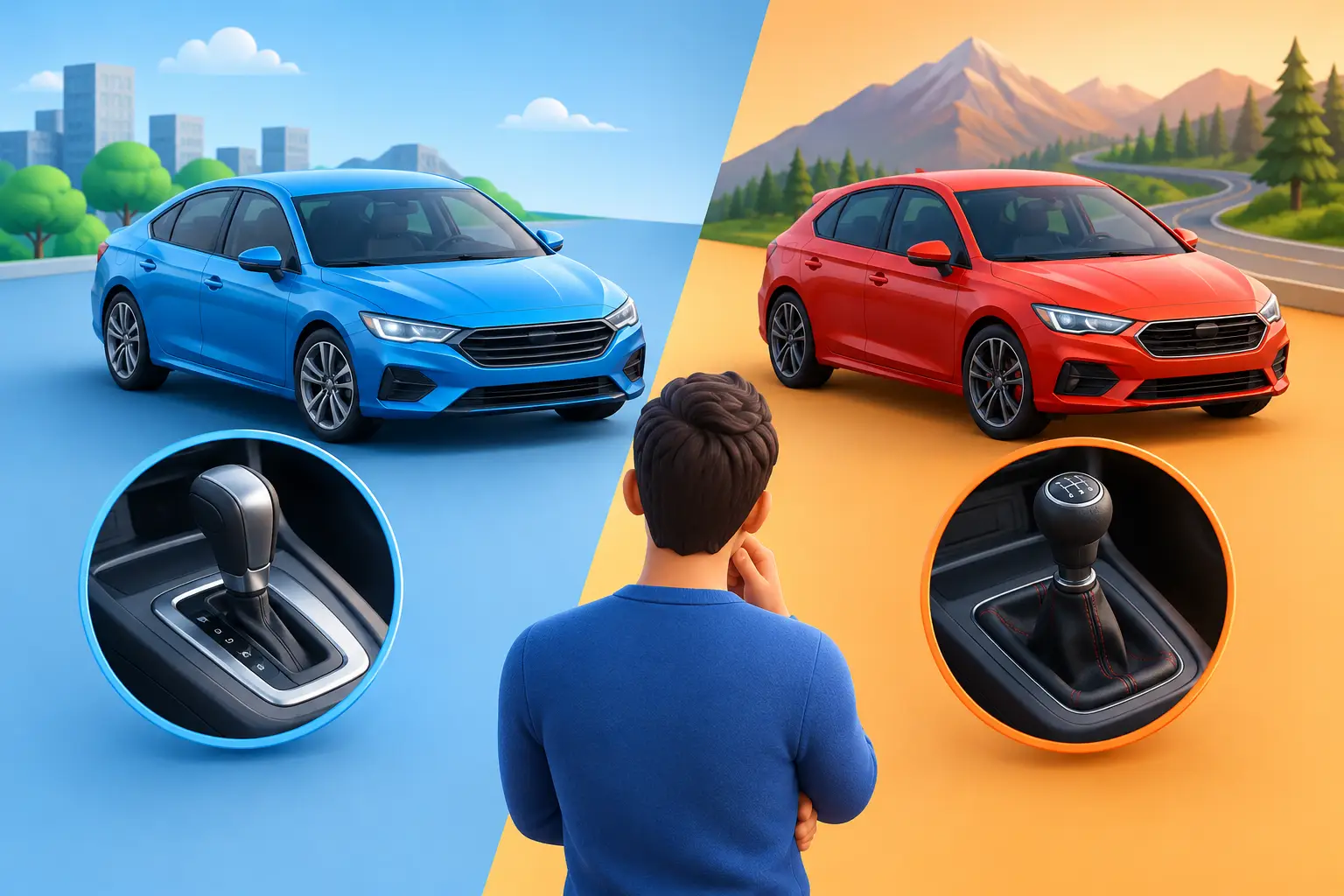
Automatic and manual differences at a glance
A manual car has three pedals: accelerator, brake and clutch. The driver selects gears using a gear lever and uses the clutch to move away smoothly, change gear and stop without stalling. Learning this coordination is a key part of manual lessons.
An automatic has two pedals: accelerator and brake. It changes gear for you, so there is no clutch pedal and no need to select gears during normal driving. You still need precise control, good anticipation and sound judgement, but there are fewer physical tasks competing for your attention.
That difference becomes particularly noticeable in Oxfordshire traffic. Approaching the Headington roundabout system, managing a busy junction in Cowley or moving slowly through town-centre congestion can involve frequent stopping and starting. In a manual, you must combine clutch control with everything else. In an automatic, you can focus more directly on speed, road position, mirrors and gaps in traffic.
Neither option makes someone a safe driver automatically. The DVSA driving test assesses the same core standards in either vehicle: controlled driving, awareness of other road users, appropriate speed, effective observations and independent decision-making.
Your licence entitlement is the biggest difference
The practical test vehicle determines what you can drive after passing. Pass your test in a manual car and your full licence allows you to drive both manual and automatic vehicles. Pass in an automatic car and your licence is restricted to automatic vehicles.
This matters most if you expect to borrow or buy a manual car, share a family vehicle, or need the widest possible choice in older and lower-priced used cars. A manual licence keeps those options open.
However, an automatic-only licence is a full UK driving licence. It allows you to drive automatic cars independently, commute, take passengers and build experience in exactly the same way. It is not a lesser pass. As more electric vehicles enter the market, and as many newer cars are automatic, the practical limitation may be less significant for some drivers than it was years ago.
It depends on your likely first car and your future plans. If your household has an automatic, or you are set on an electric vehicle, automatic lessons may fit perfectly. If flexibility is your priority, manual may be worth the extra learning stage.
Learning to drive: where the experience changes
Manual lessons build clutch and gear confidence
Early manual lessons often spend time on moving off, stopping, clutch bite, changing up and down through the gears, and hill starts. Stalling is common when you are learning. It is not a failure or a sign that you cannot drive – it is feedback that your feet and timing are still developing.
A patient instructor will introduce these skills progressively, usually beginning on quieter roads before adding busier junctions, steep gradients and more complex traffic conditions. Dual controls provide an extra safety layer while you practise.
Manual driving can feel demanding at first because several actions happen at once. Yet many learners enjoy mastering that process. Once gear changes become natural, a manual can feel controlled and engaging, particularly on varied rural roads.
Automatic lessons reduce workload, not responsibility
Without a clutch or gear lever to manage, most learners can begin practising steering, braking and road awareness sooner. This can be helpful if you are nervous, returning to driving after a long break, or fitting lessons around work or university.
Automatic learners can still make the same errors as any other learner: rushing towards a junction, missing a mirror check, choosing the wrong lane or hesitating when it is safe to go. The gearbox does not replace planning. It simply removes one technical task from the process.
For learners who feel overwhelmed by stalling or repeated gear changes, an automatic can turn driving from something stressful into something manageable. That confidence can support faster progress, provided lessons are regular and you continue to practise the full range of test skills.
Is automatic easier to pass in?
Automatic driving is often easier to learn because there is less coordination to master. Some pupils therefore reach test standard in fewer hours. But there is no guaranteed shortcut, and passing quickly should never be the only target.
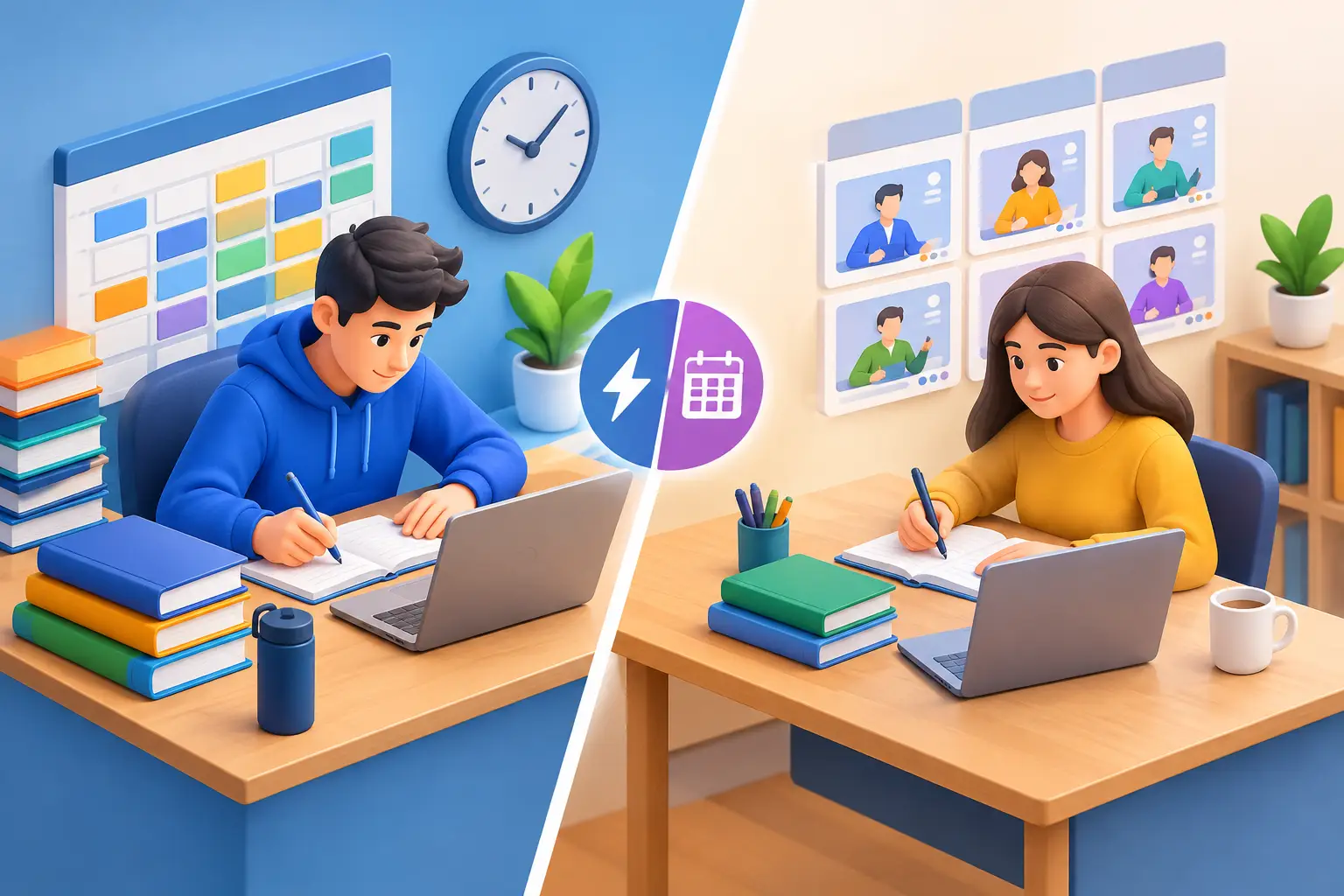
The number of lessons you need depends on your previous experience, how often you learn, your ability to practise between lessons and how confidently you deal with real traffic. An intensive course can work well for a learner who already has sound foundations and can commit fully for a concentrated period. It is less useful if essential skills still need time to settle.
A test pass needs more than a smooth drive around familiar roads. You must be ready for unfamiliar situations, independent driving directions, varied weather and the pressure of being assessed. Whether you choose automatic or manual, realistic mock tests and local test-route preparation help identify what needs more practice before test day.
Cost, cars and the long-term picture
Manual cars have traditionally been cheaper to buy and more plentiful on the used market. That can still be true, especially for older models. A manual licence may therefore make finding a first car easier if your budget is tight.
The market is changing, though. Many modern petrol, hybrid and electric cars use automatic-style transmissions, and electric cars do not need conventional gear changes at all. Insurance, fuel or charging costs, maintenance, parking and vehicle condition can make a far greater difference to your monthly spending than gearbox type alone.
When comparing lesson prices, look beyond the hourly figure. Ask whether tuition is one-to-one, whether the instructor is DVSA-approved, whether the car has dual controls, and whether mock tests and local test preparation are included in the teaching plan. Consistent instruction is usually better value than changing approach from one lesson to the next.
Which option suits your situation?
Manual may be a sensible choice if you want the broadest driving entitlement, have access to a manual car, or are comfortable allowing extra time to master clutch control. It can also suit learners who enjoy the technical side of driving and do not feel overly pressured by the early learning curve.
Automatic may be the better route if anxiety around stalling is holding you back, you need to reduce your workload in dense traffic, or your intended car will be automatic. It can be especially practical for busy adults who need focused, regular tuition and want to build confidence without spending a large share of each lesson on gear changes.
There is also no shame in changing direction. A learner who begins manual and finds clutch work is slowing overall progress can move to automatic lessons. Equally, someone who passes in an automatic can later take a manual practical test if their circumstances change. The best decision is based on honest progress, not pride or outside pressure.
Make the choice with a proper first lesson
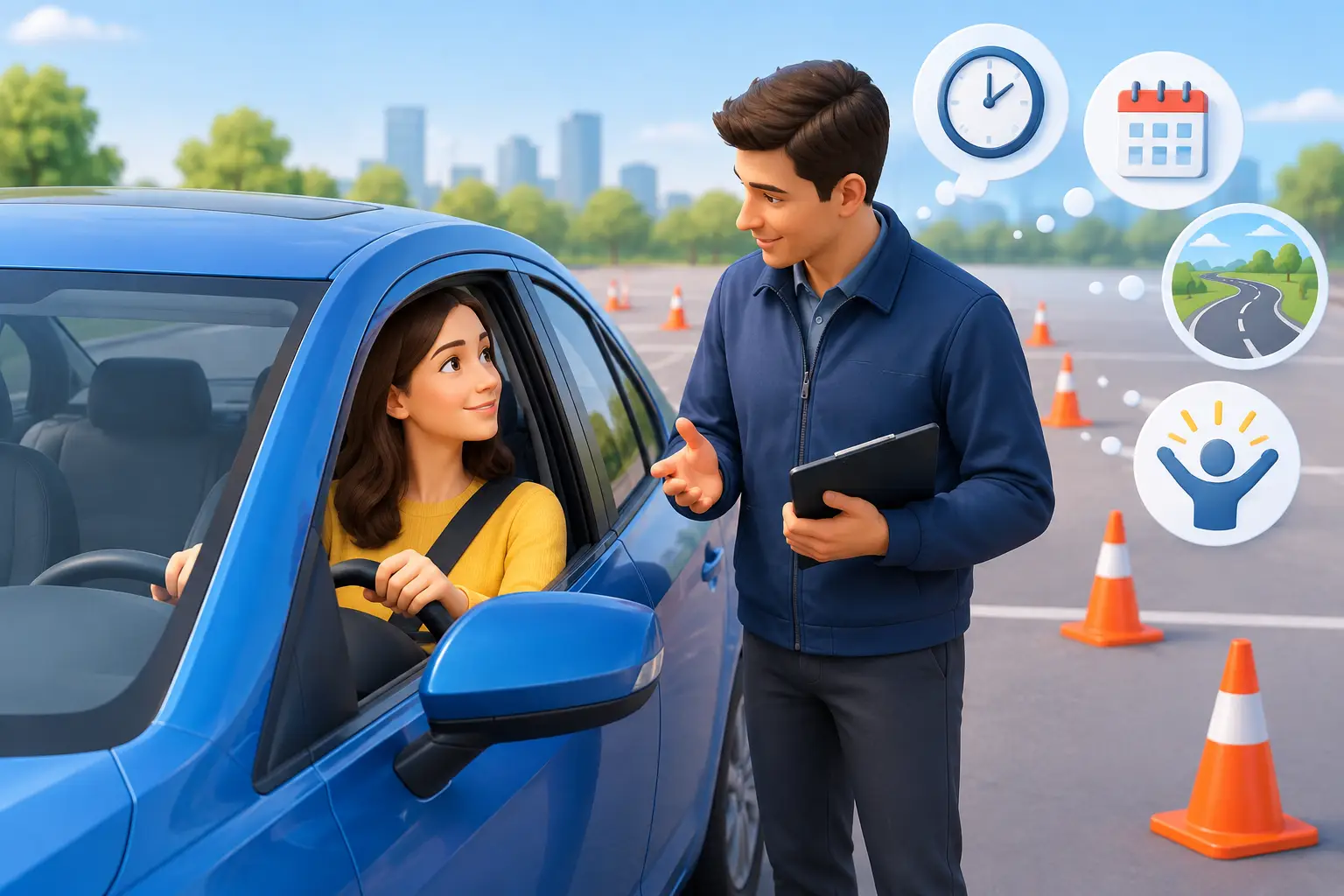
A first lesson should give you more than a chance to drive around the block. It should help you understand your starting point, identify the skills that need attention and set a realistic plan towards test readiness. At Oxford Driving Academy, one-to-one tuition can be tailored around your confidence, availability and the roads you will genuinely need to use.
If you are undecided, think ahead to the car you are most likely to drive in the next two years, not just the test you hope to pass this month. Then choose the route that lets you learn calmly, practise consistently and become the driver who can make safe decisions when no instructor is beside you.