Oxford roads can ask a lot of a new driver. From busy roundabouts and narrow residential streets to hill starts and changing lanes on faster routes, there is plenty to process at once. Automatic driving courses remove one major task from that list: clutch control and gear changes. For many learners, that creates the breathing space needed to focus on observation, steering, road position and safe decisions.
An automatic course is not an easier version of learning to drive. You will still need to meet the same DVSA driving test standard as a manual learner. The difference is that an automatic car manages the gears, allowing you and your instructor to spend more time building the skills that make you a safe, independent driver.
What happens on an automatic driving course?
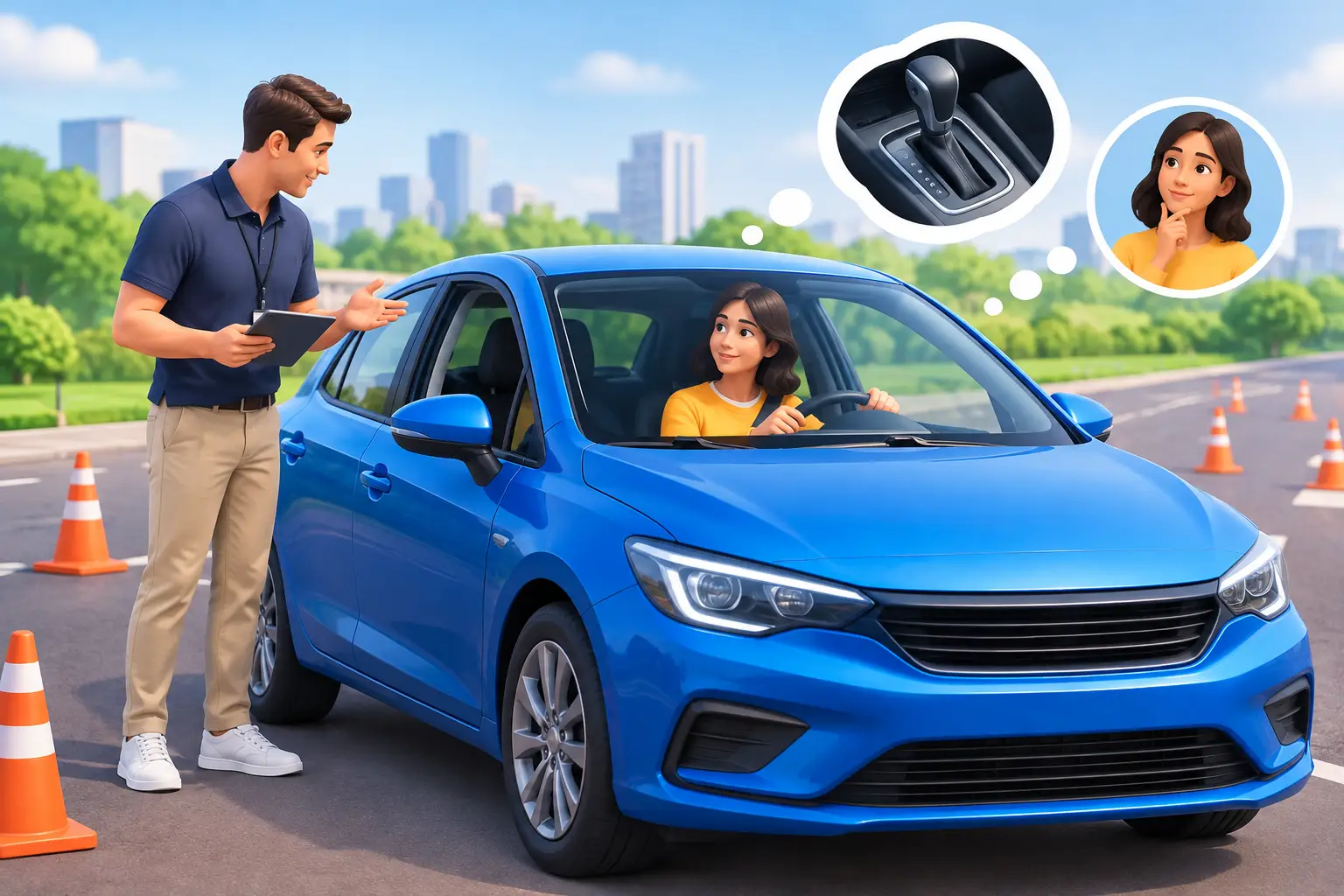
Your lessons should be one-to-one and tailored to your starting point. If you have never driven before, the first session will usually cover the controls, moving off safely, stopping, steering and basic road awareness. In an automatic vehicle, you select Drive, use the accelerator and brake progressively, and let the car select the appropriate gear.
This can be particularly reassuring if you have felt overwhelmed by stalling in a manual car. There is no clutch biting point to find and no need to coordinate gear changes while approaching a junction. That does not mean every lesson is simple, though. Smooth braking, accurate speed control and good anticipation still take practice.
As your confidence grows, lessons move onto meeting traffic, emerging at junctions, roundabouts, pedestrian crossings, manoeuvres and independent driving. Your instructor should explain not just what to do, but why you are doing it. Understanding the reason behind a safe position or observation routine makes it much easier to repeat under pressure on test day.
Who do automatic driving courses suit?
Automatic lessons can suit many different learners. They are a strong option for people who want to concentrate on the road rather than the mechanics of changing gear, including nervous first-time drivers, busy university students and adults returning to driving after a long break.
They can also work well for learners with a short timeframe. If you already have some road awareness, perhaps from cycling, riding as a passenger or previous manual lessons, removing clutch control may help you progress more quickly. Progress is always individual, however. Passing in a week or two is realistic only when your existing experience, availability and readiness for the theory test support it.
An automatic course may be especially practical if you expect to drive an automatic car after passing. Electric vehicles are automatic too, so the choice increasingly reflects the cars people expect to own, hire or use for work in the future.
The licence restriction to understand first
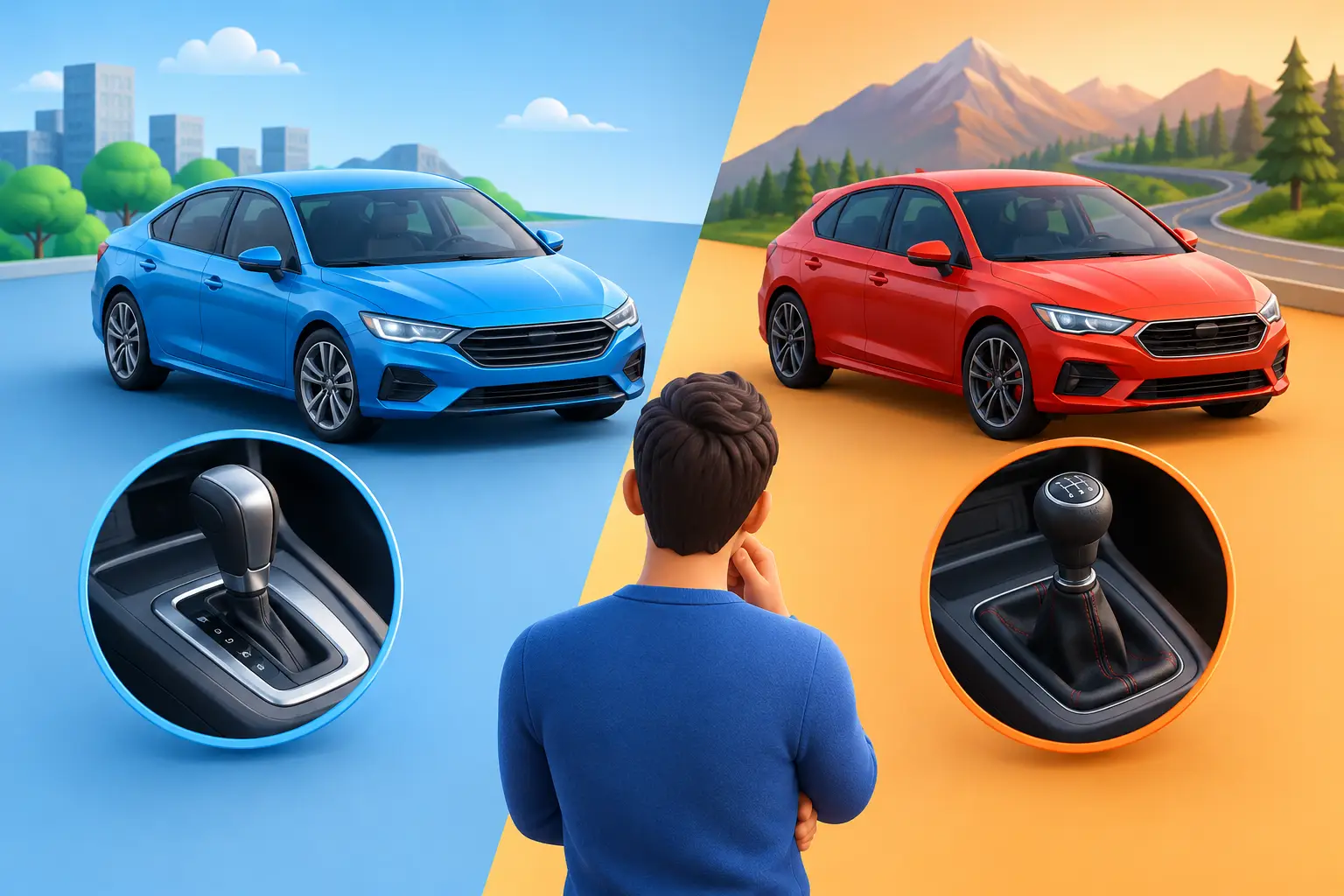
The key trade-off is simple. If you pass your practical test in an automatic car, your full UK licence permits you to drive automatic vehicles only. You cannot legally drive a manual car unless you later pass another practical test in a manual vehicle.
For some learners, this restriction is of little consequence. If your household car is automatic, or you plan to choose an electric vehicle, an automatic-only licence can be the right fit. For others, a manual licence offers more flexibility, especially where a family car, employer vehicle or lower-cost used car may have a manual gearbox.
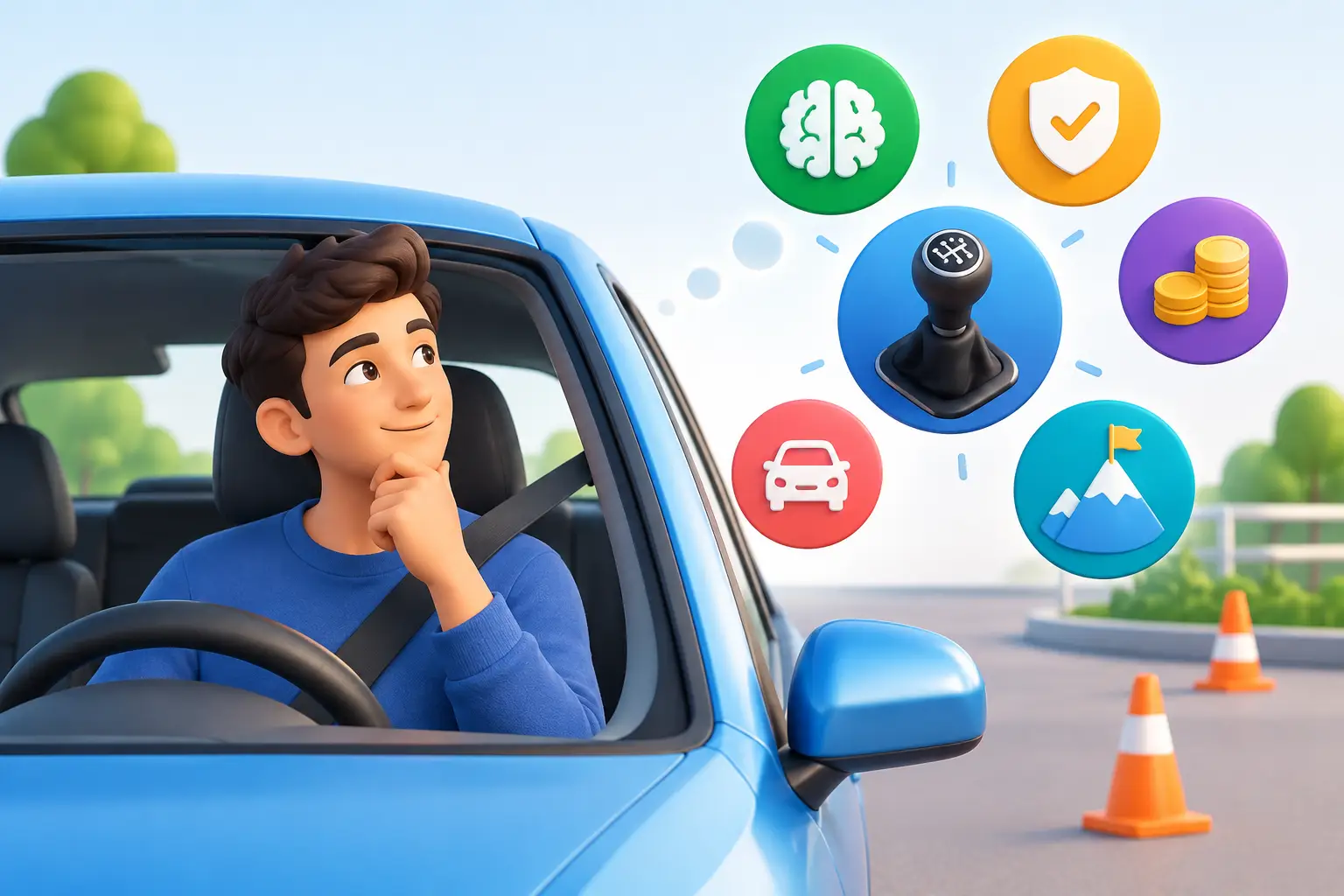
There is no universally correct choice. Think about the cars you are likely to drive over the next few years, rather than choosing solely because friends are learning manual. A patient instructor can help you compare both routes honestly before you commit to a longer package.
Skills that still matter in an automatic car
A common misconception is that automatic drivers do not need the same level of control. The DVSA examiner will still assess whether you drive safely, legally and independently. That includes checking mirrors at the right time, responding to hazards, choosing an appropriate speed and keeping a safe position on the road.
You will also need to show sound judgement at roundabouts and crossroads. In Oxfordshire, this can mean reading lane markings early, approaching multi-lane roundabouts calmly and avoiding last-minute changes of direction. On country roads, it means adapting your speed for bends, parked vehicles, cyclists, oncoming traffic and limited visibility.
Manoeuvres remain part of the practical test too. You may be asked to parallel park, bay park or pull up on the right and reverse. An automatic car can make low-speed control feel more manageable, but precise observations and safe positioning are still essential.
Choosing the right lesson pace
A course should fit your availability and learning needs, not force you into a pace that leaves you exhausted or unprepared. Weekly lessons give most beginners time to absorb feedback between drives. They can be a good choice if you are balancing lectures, work or family responsibilities.
Intensive automatic driving courses can be useful when you have a clear test date, flexible availability and enough prior experience to benefit from concentrated practice. Several hours behind the wheel each day can build familiarity quickly, particularly before the test. Yet an intensive course is not a shortcut around the required standard. You still need consistent decision-making, not one good drive.
Before booking, be realistic about your theory test. You must have passed it before you can take the practical test. It is also worth considering whether you can practise safely outside lessons with a suitable supervising driver and insured automatic car. Private practice can reinforce what you have learned, but it should not replace professional instruction.
Why local test preparation makes a difference
Knowing Oxford test-area features can reduce surprises, but it should never become route memorisation. A competent driver needs to handle an unfamiliar junction just as safely as one they have seen before. The value of local preparation is learning how to read the road early and apply your routine in the situations you are likely to meet.
A good instructor will use realistic mock tests to identify the habits that need attention. Perhaps you check mirrors but do not act on what you see, approach roundabouts too quickly, hesitate unnecessarily at safe gaps or lose accuracy when nerves rise. Clear feedback gives you a practical focus for the next lesson.
At Oxford Driving Academy, dual-control automatic tuition allows learners to practise progressively while the instructor can intervene if needed. That safety net is valuable in the early stages, but the goal remains the same: making your own safe decisions with growing confidence.
How to get more from every lesson
Arrive ready to learn rather than trying to be perfect. Tell your instructor if a particular situation worries you, whether that is hill starts, busy roundabouts, parking or driving in rain and darkness. Avoiding a difficulty can make nerves bigger; practising it in manageable stages usually makes it familiar.
After each lesson, take a moment to remember one thing you did well and one skill to work on next time. You might note that your approach speed was smoother, but you need earlier mirror checks before changing direction. Small, specific targets create visible progress and make lessons feel purposeful.
It also helps to protect your energy around intensive training. Get enough sleep, eat beforehand and leave time to arrive without rushing. Concentration is a driving skill in its own right, particularly when you are processing new information for several hours.
Automatic driving test nerves
Nerves do not mean you are not ready. Most learners feel a change in pressure when an examiner is in the passenger seat, even after successful mock tests. The aim is not to eliminate every feeling of anxiety. It is to have a routine you can rely on when nerves appear.
Use the same observation routines and decision-making process you have practised in lessons. If you make a minor error, do not assume the test is over. Stay focused on the next safe action. Examiners assess the whole drive, and a calm recovery often matters more than trying to replay a moment that has already passed.
The best automatic course is one that gives you more than a test-date target. It should leave you comfortable driving to work, visiting family, joining faster roads and handling the everyday journeys that begin once you have passed.