Your hands may feel sweaty before you even get in the car. You might worry about stalling, holding up traffic or being asked to do something you have never seen before. A nervous first driving lesson is not a sign that you will struggle to learn. It is the normal starting point for many safe, capable drivers.
The good news is that your first lesson is not a test. You are not expected to arrive knowing how to move off, steer perfectly or deal with Oxford’s busiest roundabouts. It is a one-to-one session designed to help you feel settled, understand the car and take your first safe steps at a pace that suits you.
What happens on your first driving lesson?
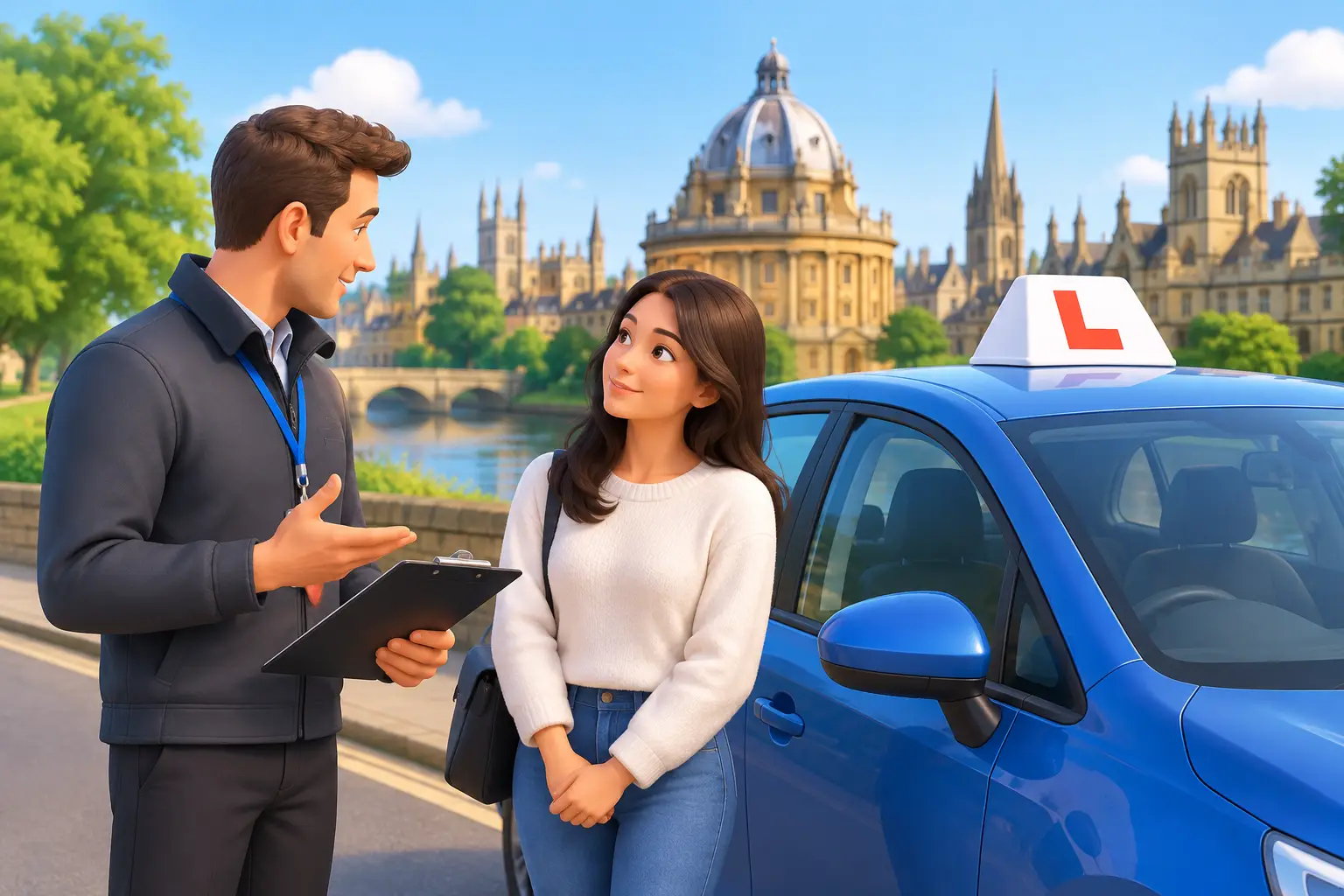
Your instructor will usually begin somewhere quiet rather than placing you straight into heavy traffic. This may be a calm residential road or an open area where you have room to think. If you have arranged doorstep collection, they will talk through the plan before asking you to take the driver’s seat.
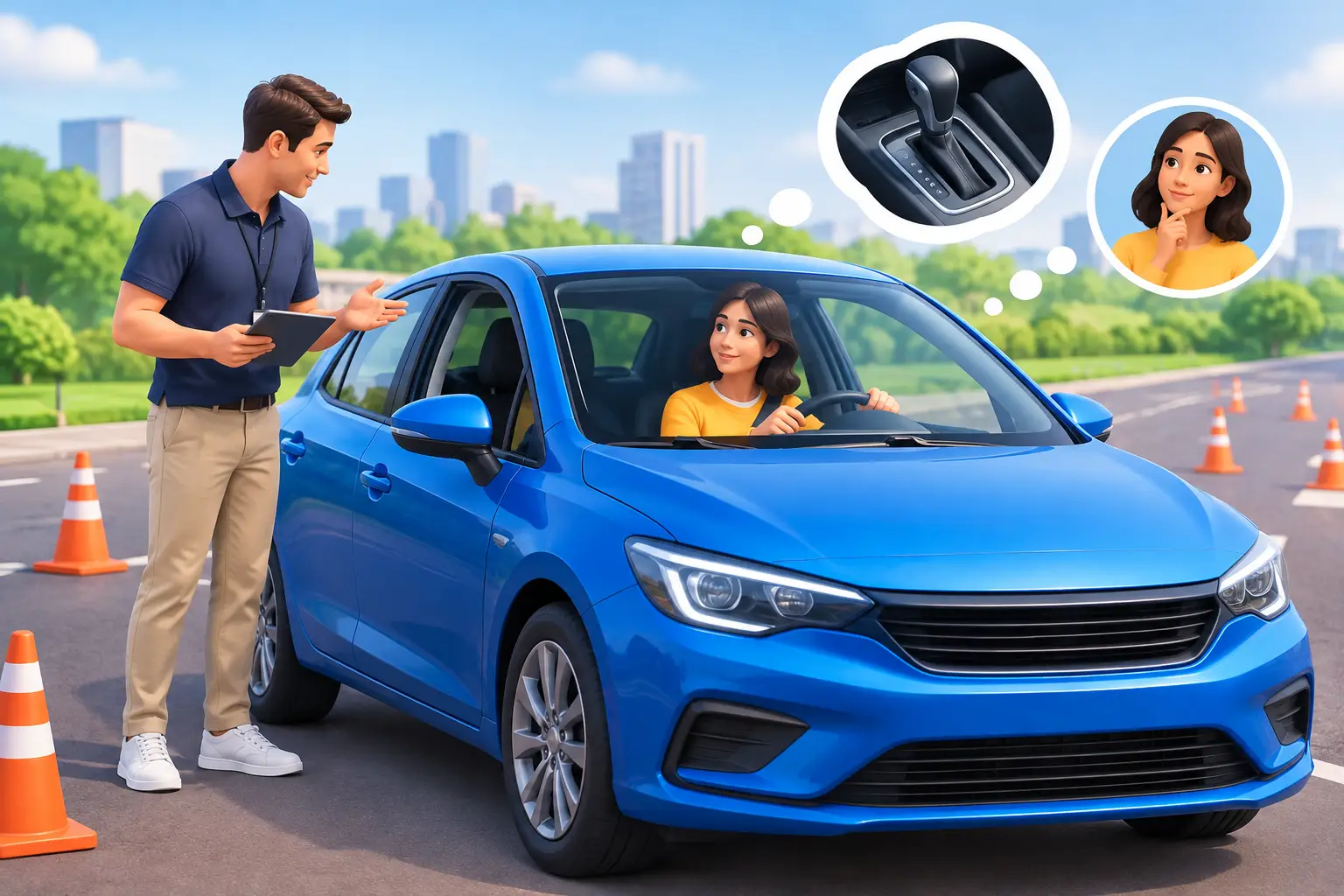
The first few minutes are for getting comfortable. You will adjust the seat so you can fully press the pedals, set the mirrors, locate the controls and make sure your seatbelt is secure. Your instructor will explain the basic routine clearly. In a manual car, this includes the clutch, brake, accelerator and gears. In an automatic, the focus is on selecting the right gear position, controlled braking and smooth use of the accelerator.
You may begin by simply practising the cockpit drill and learning where everything is. Then, when you feel ready, your instructor may guide you through moving off and stopping. They will give instructions one stage at a time: prepare the car, check it is safe, move away gently and bring the car to a controlled stop.
Some learners drive only a short distance during their first session. Others quickly feel ready to practise steering or turning at a junction. Both are completely fine. Progress is not measured by how much road you cover in one lesson. It is measured by whether you understand what you are doing and can repeat it more confidently next time.
Why a nervous first driving lesson is safer than it feels
Nerves make ordinary tasks feel bigger. You may be thinking about every possible mistake before you have turned the key. But your instructor is there to manage the wider driving environment while teaching you the skill in front of you.
DVSA-approved instructors are trained to adapt their coaching to the learner. If you need a slower explanation, a repeat demonstration or a few minutes to settle before moving off, say so. A patient instructor will not rush you to keep up with another learner’s timetable.
Dual controls provide another layer of reassurance. Your instructor has access to their own brake and, in most dual-control cars, clutch controls. That means they can step in if necessary while you are learning to judge speed, stopping distance and clutch control. You remain responsible for listening and building good habits, but you are not facing the road alone.
It also helps to remember that instructors have seen every beginner mistake many times. Stalling is common. Selecting the wrong gear can happen. So can taking a little too long to find the indicator. These are learning moments, not failures. The useful question is not, “Did I get everything right?” It is, “What will I try differently on the next attempt?”
Tell your instructor what is making you anxious
You do not need to pretend you are relaxed. Being honest at the start can make the lesson more productive. Perhaps you are worried about the clutch, anxious after watching a family member drive, concerned about traffic, or unsure because you have never sat behind the wheel before.
A good instructor can use that information to shape the lesson. Someone nervous about busy roads may benefit from beginning in quieter streets. A learner who finds instructions hard to process quickly may prefer short, calm prompts with time between each step. If you have previous driving experience abroad or had a difficult lesson elsewhere, mention that too.
Your lesson should feel structured, not unpredictable. Ask your instructor to explain what you will be doing before each new exercise. Knowing that the next goal is simply to move off and stop several times can make it far less intimidating than imagining an entire drive across Oxford.
Small preparations that make a real difference
You do not need specialist driving clothes or weeks of revision before your first lesson. A few practical choices will help you stay focused.
Wear comfortable shoes with thin, secure soles. Very thick soles make it harder to feel the pedals, while high heels, flip-flops and heavy boots can restrict control. Bring your provisional licence if your instructor has asked for it, and wear glasses or contact lenses if you need them for distance vision.
Try to eat something beforehand and arrive hydrated. Low blood sugar and too much caffeine can make anxiety feel stronger. Give yourself enough time so that you are not rushing to the pickup point, especially if you are travelling from university, work or another commitment.
It can be useful to watch a short explanation of the basic controls before the lesson, but do not overload yourself with test-route videos or complicated manoeuvre guides. At this stage, clear instruction in the car matters more than memorising jargon. Your instructor will build the correct routines from the beginning.
Manual or automatic: choose the option that helps you learn
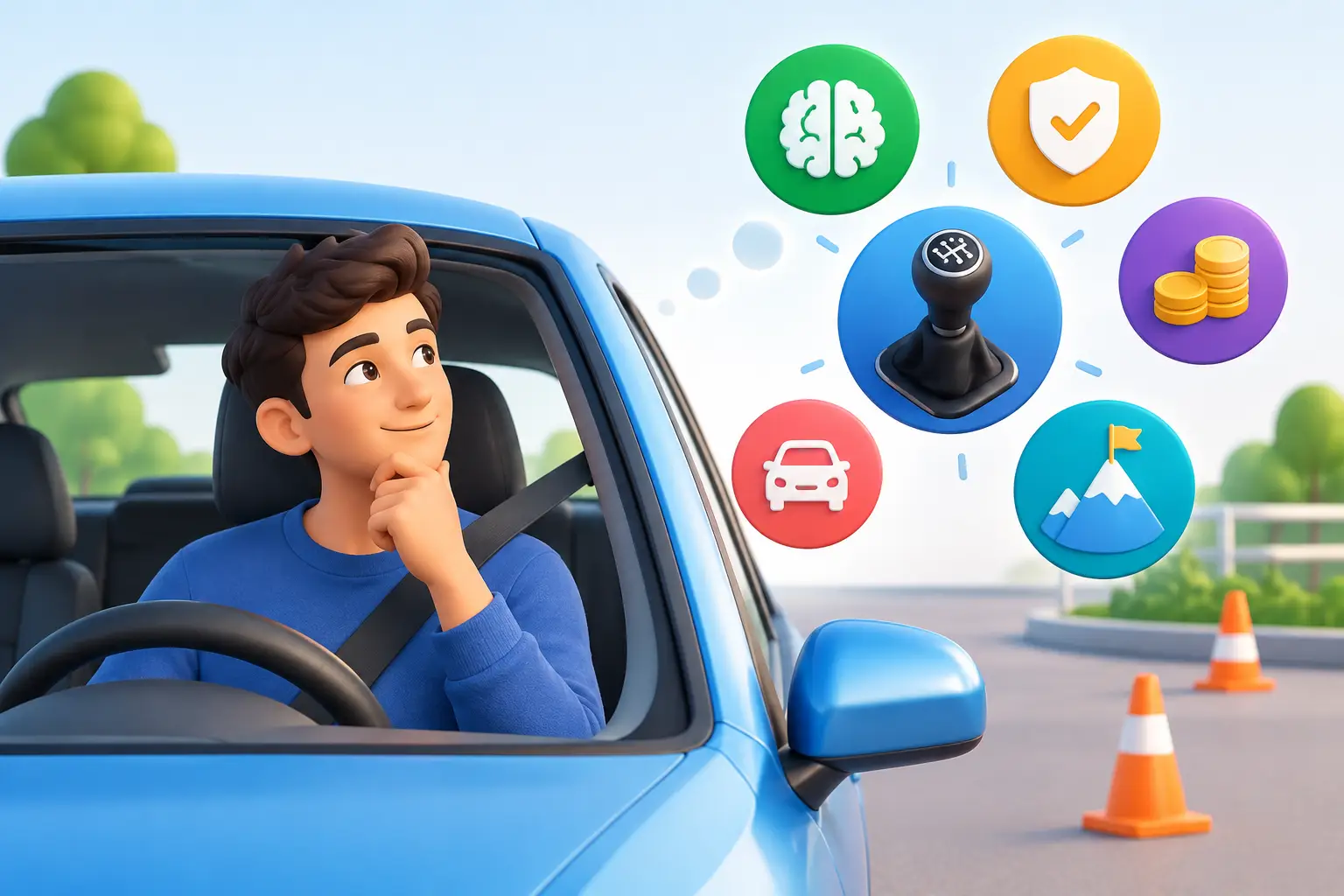
For a learner who is already feeling nervous, the manual versus automatic decision can seem like another pressure. Neither option is automatically right for everyone.
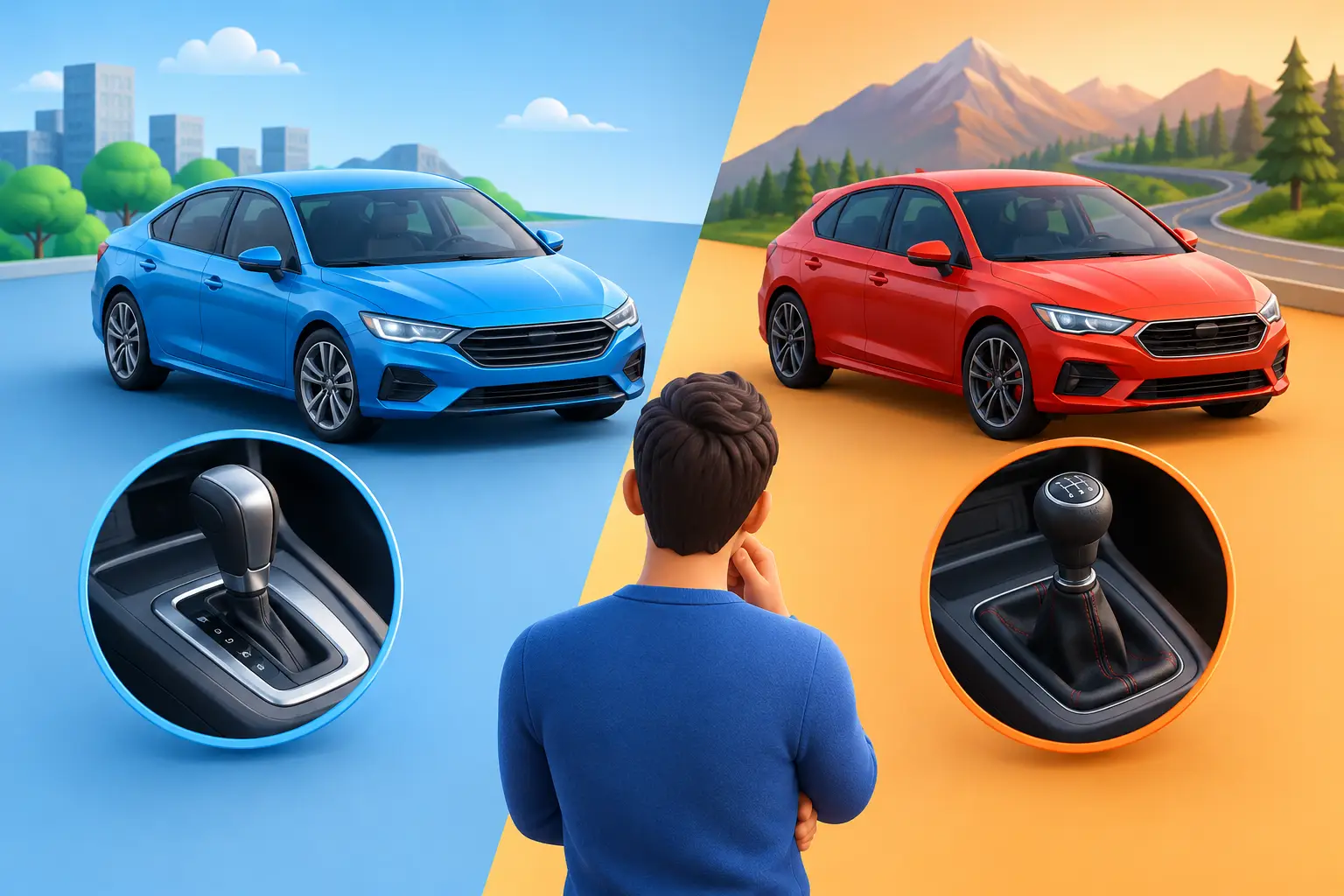
Automatic lessons remove clutch control and gear changes, allowing you to concentrate on steering, observation, road position and decision-making. This can be particularly helpful if coordination is the main source of your anxiety, or if you want to make fast progress with a limited schedule. Passing in an automatic gives you a licence restricted to automatic vehicles.
Manual lessons involve more to learn at first, particularly moving off, changing gear and hill starts. The trade-off is that a manual licence allows you to drive both manual and automatic cars. Some learners enjoy the extra involvement once the routine starts to feel natural. Others find automatic tuition gives them the confidence to focus on safe driving sooner.
There is no prize for choosing the more difficult route. Choose the lesson type that suits your future car plans, time frame and confidence. Oxford Driving Academy offers both options, so the conversation can begin with your needs rather than forcing a one-size-fits-all choice.
Keep the first lesson in perspective
Your instructor may give you a short recap at the end: what went well, what to practise mentally and what you are likely to cover next. This is a useful time to ask questions. If a term such as biting point, reference point or road position did not make sense, ask for it to be explained again in plain language.
Avoid judging your potential from one awkward moment. Almost every learner has a lesson where the clutch feels impossible, a turn feels too wide or a busy junction seems overwhelming. Skills develop through repetition, feedback and rest between sessions. A single confident move-off is progress. So is recognising that you need more time.
If anxiety is intense, regular shorter lessons may be more effective than leaving long gaps between sessions. However, this depends on your schedule and budget. Some learners benefit from a concentrated course once they have settled into the basics, while others prefer weekly lessons that give them time to absorb each skill. The best plan is one you can maintain without feeling pressured.
Before your next lesson, take a moment to notice one thing you did that you could not have done an hour earlier. Perhaps you adjusted the controls independently, moved the car safely or stayed calm after a stall. That is how confidence is built: not by waiting for nerves to disappear, but by proving to yourself, one safe action at a time, that you can handle the next one.